Jaw pain has a way of quietly taking over your day. It starts small. A little tightness when you wake up. A faint click when you chew. Then slowly, it becomes something you can’t ignore. Eating feels different. Talking feels tiring. Even resting your jaw feels uncomfortable.
This is where advanced, non-invasive therapies step in.
Laser TMJ therapy, TMJ TENS therapy, and red light therapy for TMJ are not experimental ideas anymore. They are clinically used, research-supported approaches designed to reduce pain, relax muscles, and support healing at a deeper level than traditional methods alone.
If you have already tried night guards, soft diets, or basic TMJ physical therapy and still feel stuck, understanding these therapies can help you move forward with clarity instead of confusion.
Why TMJ Pain Becomes So Persistent
Temporomandibular disorders do not usually come from a single cause. That is what makes them frustrating.
The temporomandibular joint is one of the most complex joints in the body. It does not just open and close. It slides, rotates, and stabilizes under constant load from chewing, speaking, and even stress-related clenching.
When something disrupts that balance, the entire system reacts.
Pain can come from muscle overuse, inflammation inside the joint, nerve sensitivity, or even posture issues linked to the neck and shoulders. This is why many patients who follow physical therapy for TMJ syndrome protocols still need additional support.
Advanced therapies like laser, TENS, and red light are designed to target these deeper layers of dysfunction.
What Is Laser TMJ Therapy
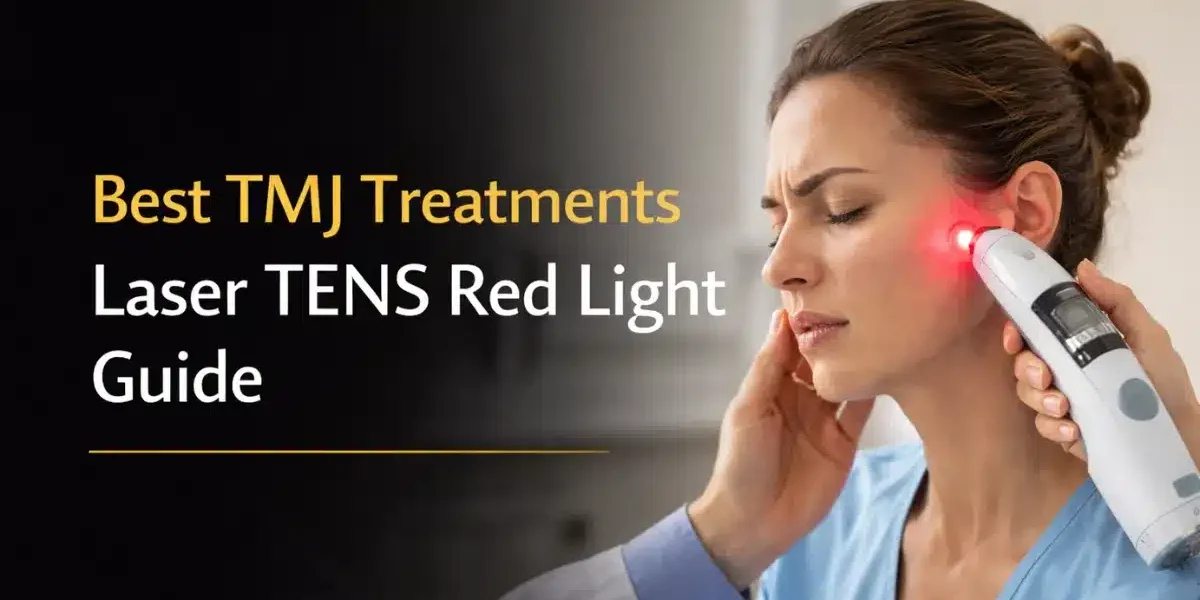
Laser TMJ therapy, also known as low-level laser therapy or cold laser therapy for TMJ, uses focused light energy to stimulate healing at the cellular level.
This is not the kind of laser used in surgery. There is no cutting, no heat damage, and no discomfort. Instead, the light penetrates tissue and interacts with cells in a way that improves how they function.
How Laser Therapy Works
When the laser light reaches your tissues, it interacts with cellular components responsible for energy production. This triggers several important biological responses:
- Reduction in inflammation markers
- Increased blood flow to the treated area
- Faster tissue repair and regeneration
- Decreased pain signaling from nerves
Patients often describe the experience as relaxing. Most feel either nothing or a mild warmth during the session.
Over time, repeated sessions build a cumulative effect. Pain reduces gradually, and jaw movement becomes smoother.
Why Laser Therapy Is Effective for TMJ
TMJ disorders often involve inflamed muscles and irritated joint structures. Laser therapy directly targets both.
Unlike medications that mask pain, laser therapy supports the healing process itself. That is why it is often combined with TMJ therapy exercises and manual therapy to improve long-term outcomes.
Cold Laser Therapy for TMJ and What It Means
You may hear the term cold laser therapy for TMJ used frequently. It simply refers to the same category of treatment without heat generation.
The word cold does not mean weak. It means controlled and precise.
This distinction is important because many patients confuse clinical laser therapy with at-home devices. Professional treatments are calibrated to deliver exact wavelengths and doses based on your condition.
That level of precision is what drives consistent results.
Red Light Therapy for TMJ
Red light therapy for TMJ is closely related to laser therapy but uses a slightly different range of wavelengths.
Instead of focused laser beams, it typically uses light-emitting diodes that deliver red or near-infrared light to the tissues.
How Red Light Therapy Helps Jaw Pain
Red light therapy works by stimulating cellular repair and reducing inflammation, similar to laser therapy but often with broader coverage.
It supports:
- Muscle relaxation
- Reduced joint stiffness
- Improved circulation
- Decreased pain sensitivity
Patients dealing with chronic jaw tension or muscular TMJ often benefit from this approach, especially when combined with physical therapy exercises for TMJ.
Clinical vs. At-Home Devices
There is a noticeable difference between professional and home use of red light therapy.
Clinical applications are targeted and dosed based on your condition. At-home devices vary widely in quality and output, which can affect results.
This is why professional guidance still plays a critical role in treatment planning.
TMJ TENS Therapy Explained
TMJ TENS therapy often surprises people the most.
The idea of electrical stimulation near your jaw can sound uncomfortable, but in reality, it is one of the most relaxing treatments available.
TENS stands for transcutaneous electrical nerve stimulation.
How TENS Therapy Works
Small electrodes are placed on the skin near your jaw muscles. These deliver low-voltage electrical pulses that interact with your nervous system.
The effects include:
- Blocking pain signals from reaching the brain
- Stimulating natural pain relief chemicals
- Relaxing tight jaw muscles
- Improving jaw movement and opening
Most patients describe the sensation as a gentle tingling or pulsing feeling.
Why TENS Is Useful for TMJ
TMJ disorders often involve muscle overactivity. Clenching and grinding patterns keep muscles in a constant state of tension.
TENS therapy interrupts that cycle.
It allows the jaw to return to a more natural resting position, which is especially helpful when combined with orthograde endodontic therapy-related dental corrections or bite adjustments.
Comparing Laser, TENS, and Red Light Therapy
Each therapy works differently, which is why they are often combined.
Below is a simple comparison to help you understand their roles.
| Therapy Type | Primary Function | Best For | Sensation |
| Laser TMJ Therapy | Cellular repair and inflammation reduction | Chronic pain and tissue healing | Mild warmth or none |
| Red Light Therapy for TMJ | Broad tissue stimulation and circulation | Muscle tension and recovery | Gentle warmth |
| TMJ TENS Therapy | Muscle relaxation and pain signal blocking | Muscle tightness and nerve pain | Tingling or pulsing |
The key takeaway is that no single therapy replaces the others. They work best when used together strategically.
When Advanced TMJ Therapies Make Sense
Not every case requires advanced treatment, but there are clear situations where these therapies become highly valuable.
Common Scenarios
- Pain continues despite consistent TMJ physical therapy exercises
- Muscle tightness remains even with night guard use
- Jaw opening feels restricted or uneven
- Pain increases during stress or prolonged talking
- Clicking or tension persists for months
These signs suggest that deeper muscular or cellular factors are involved.
Why Combination Therapy Works Better
TMJ disorders are rarely caused by one issue.
A single approach often falls short because it only targets one part of the problem.
A Multimodal Approach May Include
- TENS therapy to relax muscles
- Laser therapy to reduce inflammation
- Red light therapy to support healing
- Targeted TMJ therapy exercise routines
- Postural correction strategies
This layered approach allows each therapy to support the others.
For example, relaxing the muscles with TENS before applying laser therapy improves how effectively the tissue responds.
The Role of Physical Therapy Alongside These Treatments
Even the most advanced therapies cannot replace movement-based rehabilitation.
Exercises help retrain how your jaw functions.
That is why combining these therapies with physical therapy for TMJ dysfunction leads to better long-term results.
Without proper movement patterns, the jaw may return to dysfunctional habits.
What to Expect During Treatment
Understanding the process helps reduce anxiety.
Typical Experience
- Sessions are non-invasive and comfortable
- No downtime is required
- Each session lasts between 20 and 40 minutes
- Multiple sessions are usually needed for lasting results
Improvement is gradual. Most patients notice reduced pain and improved movement over several weeks.
How Long Results Take
These therapies are not instant fixes.
They work by supporting the body’s natural healing processes.
Most patients begin noticing changes within a few weeks, with continued improvement over time when combined with consistent care.
Patience and consistency play a major role.
Limitations You Should Know
It is important to be realistic.
These therapies are highly effective for managing symptoms, but they are not cures for every condition.
They do not:
- Reverse structural joint damage
- Replace the need for bite correction when required
- Eliminate stress-related habits completely
However, they provide a powerful middle ground between basic care and invasive procedures.
Habits That Improve Results
What you do outside treatment matters just as much.
Supportive Daily Habits
- Avoid hard and chewy foods
- Maintain proper posture throughout the day
- Practice relaxation techniques to reduce clenching
- Stay consistent with physical therapy TMJ exercises
- Sleep in positions that do not strain the jaw
These small changes enhance the effectiveness of clinical treatments.
FAQs About Advanced TMJ Therapy
Does laser TMJ therapy actually work?
Yes, it reduces inflammation and supports tissue healing when done consistently under professional guidance.
Is TMJ TENS therapy painful?
No, it produces a mild tingling sensation and often feels relaxing.
Can red light therapy help with jaw pain?
Yes, it helps reduce inflammation and supports muscle recovery, especially when combined with other treatments.
How many sessions are needed?
Most patients require multiple sessions over several weeks for lasting improvement.
Can these therapies completely fix TMJ?
They significantly reduce pain and improve function, but results depend on the underlying cause.
Final Thoughts
Jaw pain has a way of quietly taking over daily life. It affects how you eat, speak, and even rest.
What makes it more challenging is that traditional treatments do not always address the deeper causes.
That is where advanced options like laser TMJ therapy, TMJ TENS therapy, and red light therapy for TMJ come in.
They offer a non-invasive, research-backed way to reduce pain, improve function, and support long-term healing.
When combined with proper diagnosis, movement-based therapy, and lifestyle adjustments, they create a powerful path forward.
If your jaw pain has been lingering longer than it should, exploring these options with a knowledgeable provider may be the step that finally brings lasting relief.