
Jaw pain rarely starts as something serious. It usually begins quietly. A small click when you chew. A dull ache near your ears in the morning. A tight feeling that makes opening your mouth feel slightly off.
Then, over time, it becomes harder to ignore.
If this sounds familiar, there is a strong chance the temporomandibular joint is involved. And when it is, TMJ splint therapy is often one of the first structured treatments dentists consider.
This guide practically explains TMJ appliance therapy, including how splints work, what types exist, what side effects you might notice, and how long treatment usually takes. No unnecessary complexity. Just clear clinical understanding.
What Is Actually Happening in Your Jaw
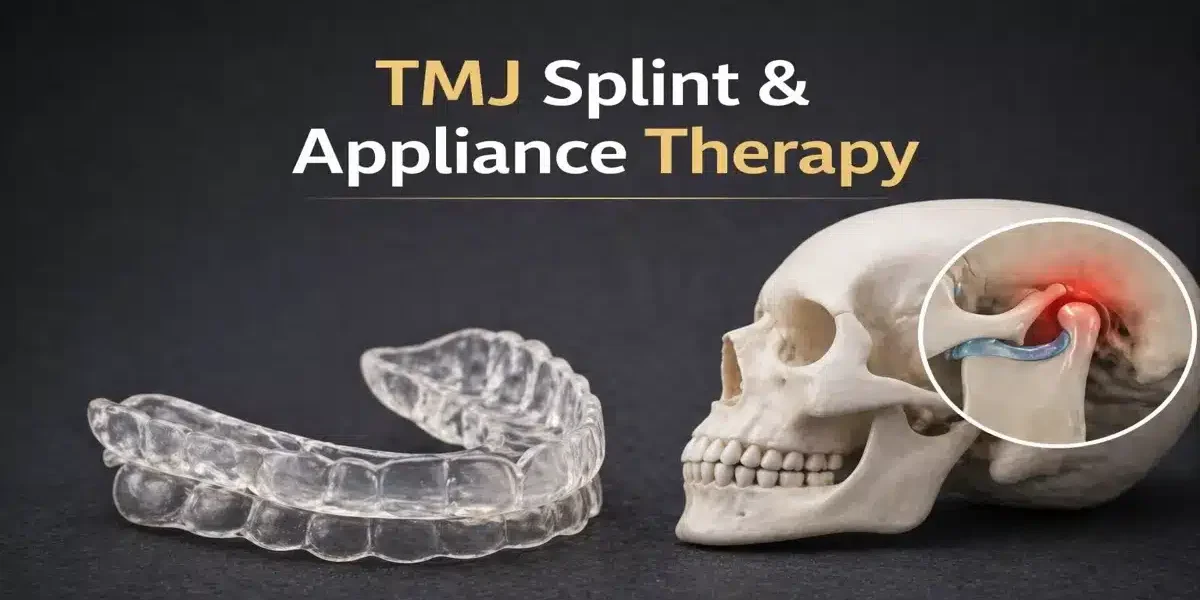
The temporomandibular joint sits just in front of each ear. It connects your jawbone to your skull and allows movement in multiple directions at once. Unlike a simple hinge joint, it rotates and slides, which makes it highly functional but also more vulnerable to dysfunction.
Every time you talk, chew, yawn, or clench your teeth, this joint is active. That constant use means even small imbalances can create noticeable symptoms over time.
When the system becomes overloaded, the surrounding muscles try to compensate. This is where most TMJ symptoms begin.
Common signs include jaw stiffness in the morning, clicking or popping sounds, headaches that start at the temples, ear pressure without infection, and fatigue in the jaw muscles after eating.
Many patients initially confuse these symptoms with dental pain or sinus issues, which delays proper diagnosis.
What is TMJ Splint Therapy?
TMJ splint therapy is a conservative dental treatment that uses a custom-made oral appliance to reposition or stabilize the jaw.
The goal is not to force the jaw into a permanent new position. Instead, it reduces strain on the muscles and joints, so the system can recover naturally.
A splint works by changing how your upper and lower teeth meet when your jaw is at rest. This reduces excessive pressure on inflamed structures and allows the muscles to relax.
Unlike over-the-counter guards, a therapeutic splint is custom-designed from impressions of your teeth. It is adjusted over time based on how your jaw responds.
This is an important distinction because many patients assume all oral guards work the same way. They do not.
If you are already exploring broader dental care options like cosmetic improvements, it is worth noting how bite alignment and jaw function can even influence long-term aesthetics, including treatments discussed in guides such as veneers cost and smile restoration planning.
How TMJ Appliance Therapy Works
TMJ appliance therapy is based on a simple principle. Remove abnormal stress from the jaw system so inflammation can settle and muscles can reset.
When the splint is worn, it creates a balanced contact surface for the teeth. This helps distribute pressure evenly instead of concentrating force in specific areas.
Over time, this reduces overactive muscle activity and decreases joint irritation.
The treatment is reversible, meaning it does not permanently alter your bite or jaw structure when properly managed. This makes it a safe first-line approach for most patients.
In clinical practice, appliance therapy is often combined with other approaches like posture correction, stress management, or physical therapy, depending on severity.
Types of TMJ Splints
There are two primary types of splints used in splint therapy for TMJ, and each serves a different purpose.
Stabilization Splint
This is the most commonly used type. It provides a flat, even surface for your teeth to rest against. The goal is muscle relaxation and reduction of grinding forces.
It is often used for patients with clenching habits or generalized jaw muscle pain.
Repositioning Splint
This type is more specialized. It is designed to guide the jaw into a slightly corrected position, often used when the disc inside the joint is displaced.
Because it actively changes jaw positioning, it requires closer monitoring and regular adjustments.
Choosing between these depends entirely on your diagnosis, not preference.
What TMJ Splint Therapy Actually Helps
TMJ splint therapy is not a single symptom solution. It addresses multiple overlapping issues that contribute to jaw dysfunction.
It is commonly used for nighttime grinding, where the splint protects the teeth and reduces joint stress. It is also effective for chronic muscle tension caused by constant clenching patterns.
In some cases, it supports patients with disc displacement by helping reduce strain on affected structures. It also helps balance uneven bite forces that overload one side of the jaw more than the other.
Many patients who combine splint therapy with other dental treatments, such as restorative or cosmetic care, often report improved overall comfort when chewing or speaking. Even treatments like getting a crown become easier to manage when jaw tension is controlled.
TMJ Splint Therapy Side Effects
Like any medical treatment, TMJ splint therapy side effects can occur, especially during the adjustment period.
Most are mild and temporary.
Common Early Adjustments
Some patients notice slight jaw soreness in the first few days. This is usually the muscles adapting to a new resting position.
Increased saliva production is also common initially, as the mouth adjusts to a foreign object.
A mild change in speech may occur, but it typically resolves quickly as adaptation happens.
Situations That Require Attention
If tooth sensitivity persists or increases, it may indicate that the appliance needs adjustment.
A bite that feels noticeably different when the splint is removed should also be monitored closely, especially with repositioning appliances.
If pain worsens after the initial adjustment period, the treatment plan should be reviewed.
Serious complications are rare when appliances are properly fitted and monitored.
Poorly fitted over-the-counter devices, however, can worsen symptoms instead of improving them.
How Long Does TMJ Splint Therapy Takes
There is no universal timeline for recovery, because TMJ splint therapy depends on the severity and cause of the dysfunction.
Most patients notice improvement within a few weeks of consistent use. Muscle-based TMJ conditions typically respond within a few months.
More complex cases involving disc displacement or structural issues may take longer.
Some patients use stabilization splints long-term at night to prevent relapse, especially if grinding is a persistent habit.
The goal is not permanent dependence. The goal is to create a recovery phase where inflammation decreases and muscle patterns reset.
Does TMJ Appliance Therapy Work Alone
In some cases, yes.
If symptoms are primarily caused by muscle overuse or grinding, tmj appliance therapy alone can provide significant improvement.
However, TMJ disorders are often multifactorial.
That means other contributing factors, such as posture, stress, and bite alignment, may also need attention.
In these cases, dentists often recommend combining splint therapy with physical therapy or behavioral adjustments.
Even daily habits matter. For example, dietary choices can influence jaw strain. Patients exploring overall oral health improvements sometimes also look into topics like how to get perfectly white teeth, but jaw function always remains the foundation.
When You Should Consider a TMJ Splint
You should consider evaluation for TMJ splint therapy if symptoms persist beyond a few weeks or interfere with daily function.
Key indicators include persistent jaw clicking, morning stiffness, frequent headaches, or known teeth grinding during sleep.
Jaw locking episodes, even if brief, are also important warning signs.
If over-the-counter pain relief only temporarily helps, that is another indicator that underlying mechanical issues may be present.
Early treatment usually leads to faster and more predictable improvement.
What Happens During TMJ Splint Treatment
The process begins with a detailed evaluation of your jaw, bite, and muscle function.
Impressions or digital scans are taken to create a custom appliance.
Once the splint is fabricated, it is fitted and adjusted to ensure even contact and comfort.
Follow up visits are essential because the jaw continues to adapt over time.
Adjustments ensure that the splint remains effective as your muscles relax and inflammation decreases.
Why Monitoring Matters
TMJ splint therapy is not a one time solution. It is a guided process.
Without follow up adjustments, the appliance may lose effectiveness or even contribute to bite imbalance.
Regular monitoring ensures that progress is tracked and corrections are made early if needed.
This is what separates clinical therapy from simple mouth guards.
Supporting Habits That Improve Results
Daily habits play a major role in how well splint therapy works.
Avoiding hard or chewy foods reduces unnecessary strain on the joint.
Maintaining good posture, especially during screen use, helps reduce neck and jaw tension.
Stress management is also important, since clenching is often unconscious and stress related.
These habits support the mechanical work done by the splint.
TMJ Splint Therapy and Broader Dental Health
Jaw health does not exist in isolation.
Bite alignment, missing teeth, and restorative dental work can all influence TMJ function.
This is why comprehensive dental planning is important when treating long-term cases.
Even restorative procedures like crowns or cosmetic treatments should consider jaw balance for long-term comfort. Many patients only realize this connection after experiencing discomfort during unrelated dental work.
FAQs
How do I know if I need a TMJ splint?
If you have ongoing jaw pain, clicking, or morning stiffness, a clinical evaluation can determine if TMJ splint therapy is appropriate.
How long does it take to feel better?
Most patients notice improvement within a few weeks, with continued progress over several months.
Are side effects serious?
Most TMJ splint therapy side effects are mild and temporary, such as soreness or increased saliva.
Can I use a store-bought night guard instead?
No, splints are custom-made to adjust jaw position, while night guards only protect teeth.
Will I need to wear it forever?
Not always. Many patients transition to nighttime use only after improvement.
Final Thoughts
TMJ splint therapy remains one of the most effective and conservative approaches for managing jaw pain, grinding, and joint dysfunction.
It works by reducing strain, allowing muscles to relax, and giving the joint a chance to recover naturally.
When properly diagnosed and monitored, TMJ appliance therapy can significantly improve comfort, function, and quality of life.
If jaw pain has been affecting your sleep, focus, or daily routine, getting evaluated early is the most important step.