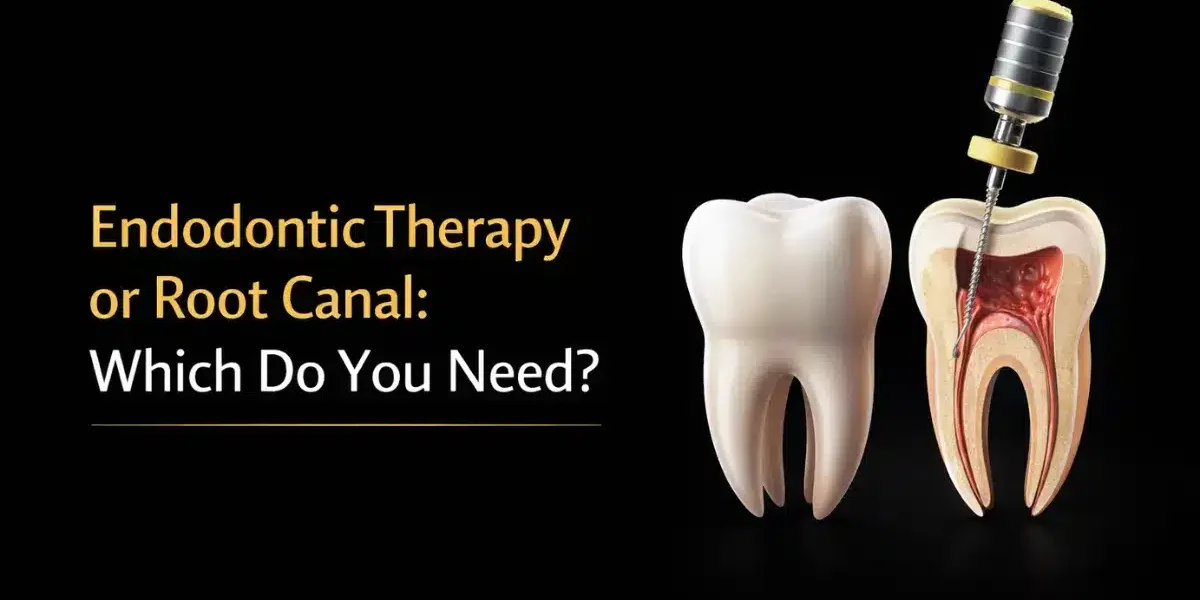
If you have been told you need a root canal, you may also hear the term Endodontic Therapy vs Root Canal. This is often confusing. Patients ask me all the time, “Is endodontic therapy a root canal?” or “Are these two different treatments?”
Let me clarify this right away. In most cases, they refer to the same treatment. Endodontic therapy is the clinical name. A root canal is the specific procedure performed during that therapy.
If you are searching for trusted care in New Jersey, you can learn more about professional endodontic therapy options available locally.
This guide will walk you through everything in clear, simple language. We will cover what it is, why it is needed, how it works, whether it hurts, and which option is best for you.
What Is Endodontic Therapy?
The word “endodontic” comes from Greek. “Endo” means inside. “Odont” means tooth.
So endodontic therapy is a treatment that focuses on the inside of the tooth.
Inside every tooth is soft tissue called pulp. The pulp contains:
- Nerves
- Blood vessels
- Connective tissue
When this pulp becomes infected or inflamed, it cannot heal on its own. That is when endodontic root canal therapy becomes necessary.
According to the American Dental Association and Mayo Clinic, root canal treatment is designed to remove infected pulp, clean the canals, and seal the tooth to prevent further infection.
What Is a Root Canal Procedure?
A root canal procedure is the most common type of endodontic therapy.
It involves:
- Removing infected pulp
- Cleaning and disinfecting the root canals
- Filling and sealing the space
- Restoring the tooth with a filling or crown
In simple terms, the root canal saves your natural tooth by treating the infection instead of removing the entire tooth.
Endodontic Therapy vs Root Canal: Is There a Difference?
Here is a simple comparison:
| Term | Meaning | What It Refers To |
| Endodontic Therapy | General category | Treatment of the inner tooth |
| Root Canal | Specific procedure | Cleaning and sealing the infected pulp |
So when someone asks, “Is endodontic therapy a root canal?” the answer is yes. A root canal is the main procedure performed during endodontic therapy.
Think of it like this. Endodontics is the field. A root canal is a treatment within that field.
Why Would You Need a Root Canal?
Patients usually need a root canal when the pulp becomes infected or inflamed.
Common causes include:
- Deep cavities
- Cracked teeth
- Trauma to the tooth
- Repeated dental procedures on the same tooth
The National Institutes of Health reports that untreated pulp infection can spread to the surrounding bone, leading to abscess formation and serious complications.
What Are the Symptoms of an Infected Tooth?
You may need endodontic therapy if you experience severe tooth pain when chewing, lingering sensitivity to hot or cold, swollen or tender gums, a small pimple-like bump on the gum, or noticeable tooth discoloration.
In some cases, there may be no symptoms at all, which is why routine exams and digital imaging are so important for early detection and treatment.
At our practice, we use advanced cbct scan dental technology to detect infections that may not be visible on standard X-rays.
How Does the Root Canal Procedure Work?
Many patients worry about pain. Let me walk you through the process step by step.
Diagnosis
We evaluate the tooth using digital X-rays or CBCT imaging.
Numbing the Area
Local anesthesia ensures you are comfortable throughout the procedure.
Accessing the Tooth
A small opening is made in the top of the tooth.
Cleaning the Canals
Special instruments remove infected pulp and bacteria.
Shaping and Disinfecting
The canals are shaped and disinfected thoroughly.
Filling the Canals
The space is filled with a biocompatible material called gutta-percha.
Restoring the Tooth
In most cases, a crown is recommended to protect the tooth.
For patients concerned about the guide to dental crown, we always review options and materials.
Does a Root Canal Hurt?
This is the most common question.
Modern root canal therapy is no more uncomfortable than getting a filling.
In fact, most patients say the pain they felt before treatment was worse than the procedure itself.
Advances supported by research from the Cleveland Clinic and ADA show that modern anesthesia and rotary instruments have significantly improved patient comfort.
After treatment, mild soreness may occur for a few days. Over-the-counter medication usually manages this easily.
What Happens After Endodontic Therapy?
After the infection is removed, the tooth becomes non-vital. This means it no longer has living pulp.
To strengthen it, a restoration is placed.
Options may include:
Crowns protect the treated tooth from cracking.
What If You Do Not Get a Root Canal?
Ignoring an infected tooth can lead to serious complications, including bone loss, swelling, the spread of infection to surrounding tissues, and eventually tooth loss.
If extraction becomes necessary, replacement options include:
- affordable dental implants NJ
- affordable dental bridge
- removable partial dentures
- overdenture locators
However, saving your natural tooth is almost always the best long-term solution.
Which Is Better: Root Canal or Extraction?
Here is a quick comparison:
| Root Canal | Extraction |
| Saves natural tooth | Removes tooth |
| Maintains jawbone | Bone may shrink |
| Faster recovery | May require an implant or bridge |
| long-term | Replacement adds |
The American Association of Endodontists consistently emphasizes that preserving natural teeth is the preferred option whenever possible.
How Long Does a Root Canal Last?
With proper restoration and care, a root canal-treated tooth can last decades.
Success depends on:
- Proper cleaning and sealing
- Timely crown placement
- Good oral hygiene
- Regular dental visits
If cosmetic improvements are also desired after treatment, patients often ask about options like permanent veneers or teeth bonding.
Can a Tooth Need Retreatment?
Yes. In rare cases, infection can return after a root canal procedure, and retreatment may be necessary to fully eliminate the infection and preserve the tooth. This can happen if the canals were complex and difficult to clean thoroughly, if the crown leaked and allowed bacteria to re-enter the tooth, or if a new crack developed over time.
Advanced imaging, such as CBCT, helps us evaluate these cases accurately and determine the best course of treatment.
Is Endodontic Therapy Safe?
Yes. Root canal therapy is one of the most studied dental procedures.
Organizations like:
- American Dental Association
- Mayo Clinic
- Cleveland Clinic
- National Institutes of Health
All confirm that modern root canal treatment is safe and effective when performed properly.
How Does This Compare to Cosmetic Procedures?
Sometimes patients confuse restorative procedures with cosmetic ones.
For example:
- Dental facings improve appearance but do not treat infection.
- Porcelain veneers before and after focus on aesthetics.
If whitening is your concern, explore how we can make your teeth white or offer professional teeth whitening in NJ.
But when infection is present, cosmetic treatments are not enough. Infection must be treated first.
What About Complex Cases?
Severely damaged teeth may require:
- inlay onlay restorations
- full mouth rehabilitation
- TMJ pain relief if bite issues are involved
Each case is unique. That is why a comprehensive diagnosis is essential.
Frequently Asked Questions
Is endodontic therapy a root canal?
Yes. A root canal is the procedure performed during endodontic therapy.
How long does a root canal take?
Most treatments take 60 to 90 minutes. Complex teeth may require two visits.
Can I eat after a root canal?
Yes, once numbness wears off. Avoid chewing on the treated tooth until the crown is placed.
Is a crown always required?
In most back teeth, yes. It prevents fractures.
Can children need root canals?
Yes, in certain cases. Treatment plans vary by age and tooth type.
Endodontic Care in Cedar Knolls, NJ
If you are experiencing tooth pain in Cedar Knolls or nearby areas, do not wait.
Infections do not improve on their own. Early treatment prevents complications.
Our team provides comprehensive family dental care and emergency dental urgent care when immediate relief is needed.
We use advanced technology and evidence-based protocols to ensure predictable results.
Final Thoughts: Which Option Is Right for You?
When comparing Endodontic Therapy vs Root Canal, remember this:
They are not competing treatments. There are two ways of describing the same lifesaving procedure for your tooth.
If you are in pain, delaying treatment only increases risk.
Saving your natural tooth is almost always better than replacing it.
If you are unsure about your symptoms, schedule an evaluation with a trusted Cedar Knolls dentist.
At The Advanced Dental Center of Cedar Knolls, we are committed to comfortable, precise, and patient-focused care.
Call today to book your consultation and protect your smile for years to come.