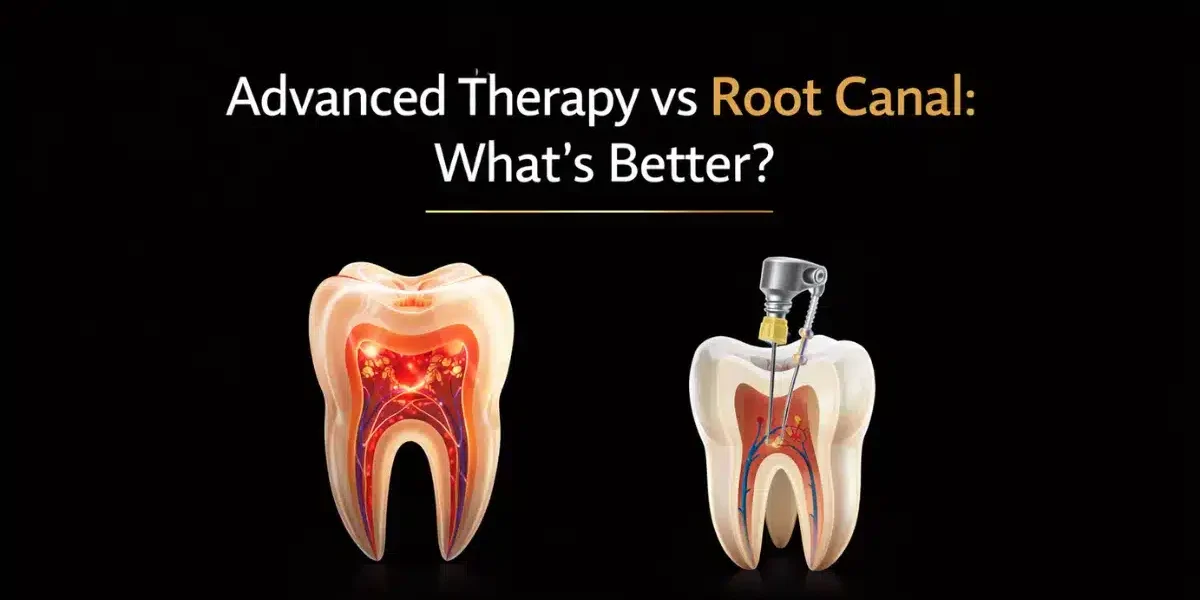
When you hear the terms advanced endodontic therapy or traditional root canal, it’s normal to feel a little anxious. Most patients assume every root canal is the same, but modern dentistry has developed a variety of ways to treat infections inside a tooth. Understanding regenerative endodontics vs traditional root canal therapy can help you feel more confident and informed about your treatment options.
Root canal procedures are designed to remove infected tissue, eliminate pain, and preserve the natural tooth. While many infections can be treated with standard methods, there are cases where a more precise or biologically oriented approach is required. In these situations, advanced root canal therapy ensures that complex teeth receive the level of care necessary to prevent future problems.
What Happens During Endodontic Root Canal Therapy
Inside every tooth, there is a chamber called the pulp. The pulp contains nerves and blood vessels that are vital during tooth development. Once the tooth is fully formed, the pulp is less essential, but infections can still threaten the tooth’s health and stability.
Bacteria can enter the pulp through deep cavities, cracks in the enamel, or trauma from an accident. Once the pulp becomes infected, inflammation develops, causing pressure within the tooth and resulting in pain. Endodontic root canal therapy involves removing this infected tissue, cleaning the canals, and sealing the space to prevent reinfection.
Symptoms that usually indicate a patient may need endodontic treatment include persistent tooth pain, lingering sensitivity to hot or cold, swelling around the gums, pain while chewing, or small bumps near the root. Many patients are surprised to learn that modern root canals are far more comfortable than the reputation suggests. With advanced tools, magnification, and digital imaging, dentists can perform the procedure with precision and minimal discomfort.
Orthograde Endodontic Therapy
Orthograde endodontic therapy is the traditional method of performing a root canal, in which the dentist approaches the canal from the top of the tooth. A small opening is made in the crown to access the pulp, which is then removed carefully. Each canal is cleaned, disinfected, and sealed to prevent reinfection.
This approach works very well for most patients, especially those with teeth that have straightforward canal structures. In Cedar Knolls, patients who have experienced Endodontic Therapy for Anterior and Premolar Teeth often benefit from orthograde endodontic therapy when infection is confined and the anatomy is relatively simple. Modern enhancements like digital imaging and high magnification have increased accuracy, reduced the risk of complications, and improved patient comfort.
What Is Regenerative Pulp Therapy
Regenerative pulp therapy represents a significant evolution in dental care. Rather than simply removing the infected pulp, regenerative techniques aim to stimulate the body to repair and regenerate tissue inside the tooth. This is achieved by placing specialized materials that encourage the growth of pulp-like tissue and, in some cases, utilizing stem cells from nearby tissue to restore vitality to the tooth.
This method is particularly useful for younger patients whose teeth have not yet fully developed. Preserving living tissue allows the root to continue growing, strengthening the tooth over time. While traditional endodontic therapy focuses on removal and sealing, regenerative pulp therapy is biologically driven, promoting healing from within.
Patients and parents in Cedar Knolls often have questions about the difference between regenerative procedures and traditional root canals. Essentially, both aim to save the tooth, eliminate infection, and prevent future complications. The difference lies in approach; one removes and replaces tissue, the other encourages natural regeneration where possible.
When Advanced Root Canal Therapy Is Necessary
Not every tooth has a simple canal system. Some teeth have multiple, curved, or calcified canals that make traditional approaches insufficient. Advanced root canal therapy is recommended when the tooth presents complex anatomy or has been previously treated unsuccessfully.
Complex cases may involve:
- Curved or twisted root canals that are difficult to navigate
- Calcified canals that obstruct access
- Hidden accessory canals that may harbor infection
- Infection returning after a previous root canal
- Teeth damaged by trauma affecting the pulp
Technology is crucial in these cases. Three-dimensional scans reveal the entire tooth structure, and operating microscopes allow dentists to see canals invisible to the naked eye. These tools make it possible to treat teeth that might have been considered untreatable in the past.
For example, a patient in Cedar Knolls who has had previous dental trauma may be a candidate for Advanced Endodontic Therapy for Complex Dental Cases, which combines precision with the latest technology to save the tooth effectively.
Comparing Regenerative Endodontics vs Traditional Root Canal Therapy
Both regenerative and traditional approaches aim to eliminate infection and preserve the natural tooth, but they differ in methodology. Traditional endodontic therapy removes the infected pulp and seals the canals with biocompatible materials. This method has been used successfully for decades, especially in fully developed adult teeth.
Regenerative pulp therapy, on the other hand, focuses on restoring vitality by stimulating tissue growth within the tooth. This is particularly advantageous in young patients or teeth with incomplete root development. While regenerative procedures are not appropriate for every case, they expand the possibilities for saving teeth and preserving function over the long term.
In adults with fully developed teeth, traditional therapy remains the most reliable solution. In select cases, combining advanced root canal techniques with regenerative strategies may offer additional benefits. This tailored approach emphasizes precision, biologic support, and long-term stability of the natural tooth.
Benefits of Modern Endodontic Treatments
Modern endodontic procedures, whether traditional, regenerative, or advanced, offer numerous benefits over older techniques. Patients in Cedar Knolls who undergo these treatments often experience:
- Highly accurate diagnosis through digital imaging and CBCT scans
- Enhanced precision when cleaning and shaping canals
- Reduced discomfort during and after treatment
- Shorter recovery periods
- Preservation of natural teeth and their function
Keeping natural teeth is critical for maintaining bite alignment, protecting the jawbone, and providing sensory feedback that artificial replacements cannot replicate. Many patients find that preserving their own teeth offers advantages that far outweigh any perceived inconvenience of treatment.
Three Key Advantages of Regenerative Endodontics
- Stimulates natural tissue repair and strengthens tooth structure
- Supports continued root development in immature teeth
- Reduces the long-term risk of tooth weakening and fracture
Three Situations Where Advanced Root Canal Therapy Is Recommended
- Teeth with complex or unusual root anatomy
- Previously treated teeth with recurring infection
- Teeth affected by trauma that compromise pulp health
Three Symptoms That Suggest Endodontic Treatment May Be Needed
- Persistent pain when biting or chewing
- Lingering sensitivity to hot and cold temperatures
- Swelling, tenderness, or bumps near the gums
Choosing the Right Treatment in Cedar Knolls, NJ
Deciding between regenerative pulp therapy and traditional root canal therapy requires professional evaluation. Dentists in Cedar Knolls assess the extent of infection, tooth anatomy, and potential for tissue regeneration before recommending a treatment plan.
Some patients benefit most from traditional therapy due to fully developed roots or specific anatomical considerations. Others, especially younger patients, may be candidates for regenerative therapy to preserve tissue and support ongoing root development. Early diagnosis ensures the procedure is as conservative and effective as possible, reducing complications and supporting long-term oral health.
Final Thoughts
Understanding regenerative endodontics vs traditional root canal therapy empowers patients to make informed decisions and reduces anxiety about dental procedures. Both methods aim to save teeth, relieve pain, and maintain natural function, but each offers unique advantages depending on the patient’s age, tooth development, and complexity of infection.
Modern dentistry in Cedar Knolls has made it possible to treat infections effectively while preserving the natural tooth. If you experience persistent tooth pain, sensitivity, or swelling, seeking early evaluation is essential. Whether your treatment involves traditional root canal therapy, regenerative pulp therapy, or advanced root canal techniques, the goal remains the same: to save your tooth, protect your oral health, and maintain the natural function and appearance of your smile.