When teeth are severely worn, damaged, or weakened across the entire mouth, treating just one or two teeth is often not enough. In these situations, full mouth crown restoration offers a comprehensive solution that restores function, comfort, and appearance at the same time.
This treatment is often part of a broader full-mouth rehabilitation plan, designed to rebuild the bite, protect remaining tooth structure, and help patients eat and smile with confidence again.
Unlike a single dental crown, full mouth crown restoration requires detailed planning, advanced diagnostics, and a carefully staged approach. Understanding what the process involves can help patients feel informed and confident before starting treatment.
What Is Full Mouth Crown Restoration?
Full mouth crown restoration is a restorative dental procedure in which most or all teeth in the upper and lower arches are covered with custom-made crowns. Each crown is designed to restore the tooth’s shape, strength, and function while working in harmony with the rest of the bite.
This treatment goes beyond cosmetic improvement. It addresses:
- Structural tooth damage
- Bite imbalance
- Worn enamel
- Functional chewing problems
- Long-standing dental breakdown
Because multiple teeth are restored at once, the dentist must carefully design how the teeth fit together, ensuring proper jaw alignment and long-term comfort.
How Is Full Mouth Crown Restoration Different From a Single Crown?
A single crown focuses on restoring one damaged tooth. Full mouth crown restoration, however, treats the mouth as a complete system.
Key differences include:
- Bite alignment is restored across all teeth
- Jaw position and chewing balance are corrected
- Aesthetic harmony is planned for the entire smile
- Treatment is phased and carefully sequenced
This is why full mouth cases require advanced planning tools such as CBCT scan, dental imaging, and digital bite analysis.
Who Typically Needs Full Mouth Crown Restoration?
Patients who benefit from this treatment often have complex dental conditions that affect many teeth at once.
Common indications include:
- Severe tooth wear from grinding or clenching
- Acid erosion from reflux or dietary habits
- Multiple large or failing restorations
- Teeth weakened by cracks or fractures
- Bite collapse or jaw discomfort
- Long-term neglect or failed dental work
In some cases, patients also experience jaw pain that may require coordinated care alongside TMJ pain relief therapies.
What Problems Can Full Mouth Crown Restoration Fix?
This treatment is designed to solve both functional and aesthetic problems.
Functional Improvements
- Stronger chewing ability
- Balanced bite alignment
- Reduced jaw strain
- Improved speech clarity
Aesthetic Improvements
- Natural tooth shape and symmetry
- Even smile line
- Improved tooth color uniformity
Oral Health Benefits
- Protection of weakened teeth
- Reduced risk of further breakdown
- Easier daily oral hygiene
According to the American Dental Association and Cleveland Clinic, restoring bite balance plays a key role in preventing further tooth and jaw damage.
Step-by-Step: The Full Mouth Crown Procedure
Every full mouth crown procedure follows a structured, personalized plan.
1. Comprehensive Examination and Planning
- Digital X-rays and 3D imaging
- Bite and jaw relationship analysis
- Evaluation of gum and bone health
Advanced diagnostics may also reveal the need for endodontic therapy before crown placement.
2. Pre-Restorative Treatments (If Needed)
Some patients require additional care before crowns can be placed, such as:
- Treating infections
- Gum therapy
- Removing non-restorable teeth
3. Tooth Preparation
- Removal of damaged tooth structure
- Shaping teeth to support crowns
- Preserving as many natural teeth as possible
4. Temporary Crowns
Temporary crowns:
- Protect prepared teeth
- Allow patients to function comfortably
- Help test bite alignment
5. Final Crown Fabrication
Crowns are crafted to:
- Match facial proportions
- Restore proper chewing forces
- Blend naturally with surrounding teeth
Some cases may use advanced systems like Cerec same-day crowns when appropriate.
6. Final Placement and Adjustments
- Permanent crowns are seated
- Bite is carefully adjusted
- Comfort and function are evaluated
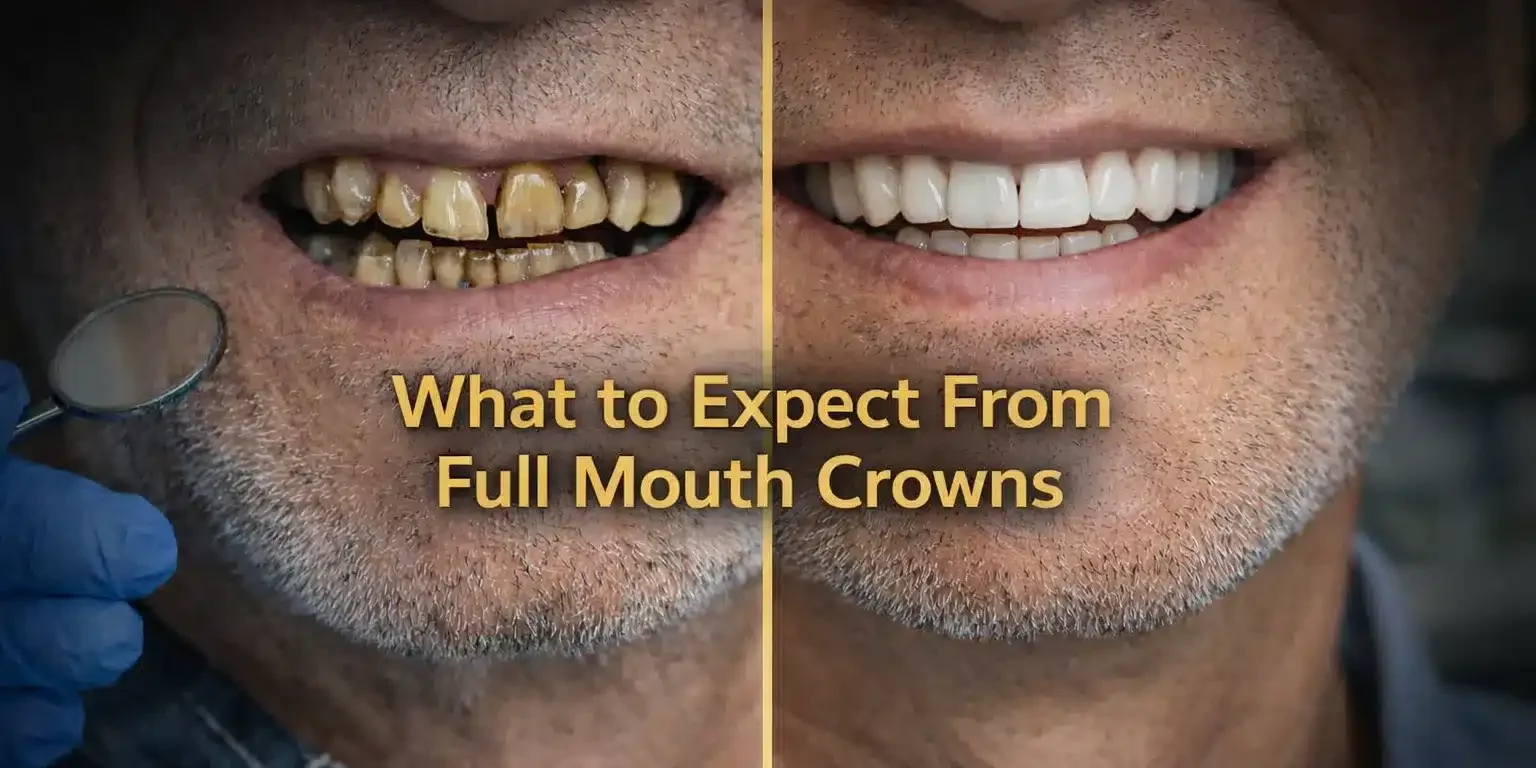
Full Mouth Crown Before and After: What Changes?
Patients often experience life-changing improvements after treatment.
| Before Treatment | After Treatment |
| Worn or broken teeth | Strong, protected teeth |
| Difficulty chewing | Restored chewing efficiency |
| Uneven bite | Balanced bite alignment |
| Sensitivity or pain | Improved comfort |
| Aged smile appearance | Natural, refreshed smile |
Dentists often compare these transformations to rebuilding the foundation of a house rather than simply repainting it.
Types of Crowns Used in Full Mouth Restoration
The choice of crown material depends on bite strength, tooth position, and aesthetic goals.
Common Options Include:
- Porcelain (all-ceramic)
- Zirconia
- Porcelain-fused-to-metal
Your dentist may also discuss advanced ceramic options based on durability and appearance, including porcelain/ceramic dental crowns, without focusing on pricing.
How Long Does Full Mouth Crown Restoration Take?
The timeline varies by individual case.
Typical Treatment Phases
- Planning and diagnostics
- Tooth preparation and temporaries
- Crown fabrication
- Final placement
Factors That Influence Duration
- Number of teeth involved
- Need for additional treatments
- Healing response
- Lab turnaround time
On average, treatment is completed over several months to ensure precision and long-term success.
Recovery, Aftercare, and Long-Term Maintenance
Immediately After Treatment
- Mild sensitivity is common
- Avoid very hard or sticky foods initially
- Follow the dentist’s care instructions
Long-Term Maintenance
- Brush twice daily with a soft brush
- Floss carefully around crowns
- Wear a night guard if you grind your teeth
- Attend regular dental visits
Patients may also benefit from supportive treatments such as tooth bonding or inlay or onlay restorations for adjacent teeth when needed.
How Does This Compare to Veneers, Dentures, or Implants?
Each treatment serves a different purpose.
- Veneers focus mainly on the front teeth’s appearance, such as permanent veneers
- Dentures replace missing teeth, including removable partial dentures
- Implants replace missing roots entirely, such as affordable dental implants in NJ
Full mouth crown restoration is ideal when natural teeth are present but structurally compromised.
Why Experience Matters for Full Mouth Crown Restoration
This treatment requires:
- Advanced restorative knowledge
- Precise bite planning
- Long-term vision for oral health
A dentist offering family dental care with experience in complex restorative cases can coordinate every step safely and predictably.
Full Mouth Crown Restoration in Cedar Knolls, NJ
Patients in Cedar Knolls and nearby communities benefit from modern technology, careful planning, and personalized treatment approaches. The Advanced Dental Center of Cedar Knolls understands the importance of long-term function, not just short-term fixes.
Frequently Asked Questions
Is a full mouth crown restoration painful?
Local anesthesia is used, and most patients report minimal discomfort during treatment.
Will I be able to eat normally afterward?
Yes. Once adjusted, crowns restore normal chewing function.
How long do full mouth crowns last?
With good care and regular dental visits, crowns can last many years.
Is this a cosmetic or restorative treatment?
It is both. The primary goal is function and health, with aesthetics as a major benefit.
Conclusion: Is Full Mouth Crown Restoration Right for You?
Full mouth crown restoration is a powerful solution for patients with widespread tooth damage, bite problems, or long-term dental breakdown. When carefully planned and expertly performed, it restores comfort, confidence, and oral health for years to come.If you are considering advanced restorative care, schedule a consultation with The Advanced Dental Center of Cedar Knolls to explore your options and receive a personalized treatment plan.