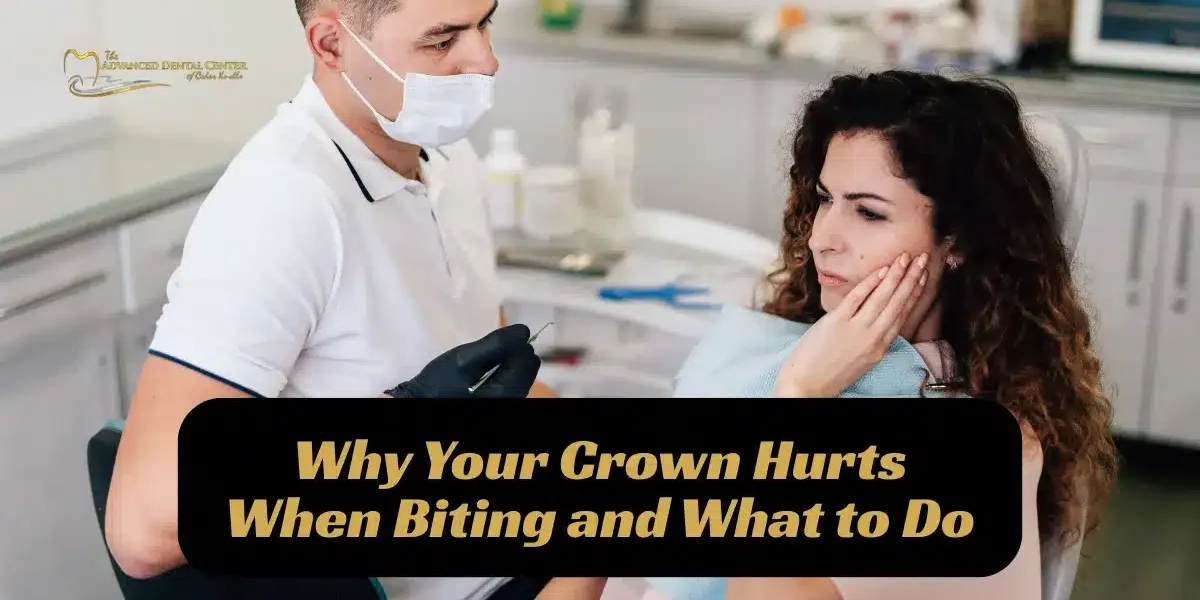
If your crown hurts when biting down, it is a sign that something is not functioning the way it should. While mild sensitivity after a crown placement can be normal, sharp or repeated pain when chewing is not. This type of discomfort often points to a bite issue, inflammation, or a problem beneath the crown that needs attention.
Patients experiencing pain under a crown are often surprised to learn how many different factors can cause it. In many cases, the issue can be corrected quickly once the source is identified. Early evaluation is important because untreated crown pain can worsen and may lead to infection or tooth damage.
Understanding why tooth crown pain happens and knowing when to seek care can help protect your tooth and prevent more complex treatment.
Is It Normal for a Crown to Hurt When Biting?
It is common to feel some sensitivity right after getting a dental crown. This usually fades within a few days.
Normal sensations may include:
- Mild pressure sensitivity
- Temporary gum soreness
- Slight discomfort when chewing
Pain is not normal if:
- It happens every time you bite down
- The pain feels sharp or intense
- The discomfort gets worse over time
- You feel pain in a tooth with a crown when biting down
These symptoms mean the crown or the tooth underneath needs to be evaluated by a dentist.
What Does It Mean When a Crown Hurts Only When Chewing?
Pain that appears only when chewing usually indicates pressure-related issues. This often suggests:
- A bite imbalance
- Inflammation under the crown
- Structural stress on the tooth
Dental organizations such as the American Dental Association explain that pain triggered by biting is often mechanical, meaning it relates to how the tooth contacts opposing teeth.
Common Reasons a Crown Hurts When Biting Down
1. The Bite Is Too High
This is the most common cause of tooth crown pain.
If the crown is slightly taller than the surrounding teeth:
- It absorbs extra force during chewing
- Pain occurs immediately when biting
- Jaw or facial soreness may develop
This type of tooth crown pain when chewing is often resolved with a simple bite adjustment.
2. Inflammation Under the Crown
Inflamed tissue beneath a crown can cause:
- Pain under a crowned tooth
- Sensitivity to pressure
- Discomfort when eating firm foods
Causes may include:
- Cement irritation
- Improper crown fit
- Gum inflammation
When addressed early, inflammation usually resolves without further complications.
3. Nerve Irritation or Infection
If the nerve inside the tooth is irritated:
- Pain may throb or pulse
- Sensitivity can linger
- Tooth pain under the crown comes and goes
This explains symptoms like throbbing tooth pain after crown placement. If untreated, nerve irritation can progress into infection.
4. Painful Tooth After Root Canal and Crown
A painful tooth after root canal and crown placement is uncommon but possible.
Reasons include:
- Residual infection
- Undetected cracks
- Inflammation at the root tip
Biting pain after a root canal should always be evaluated promptly.
5. Temporary Crown Tooth Pain
Temporary crowns are more likely to cause discomfort because:
- They are not custom-fitted
- The cement is weaker
- They may shift during chewing
Tooth pain after temporary crown placement often improves once the permanent crown is placed.
Tooth Pain Under Crown: Warning Signs That Need Attention
You should contact a dentist if you notice:
- Sharp pain when biting
- Persistent pressure sensitivity
- Swelling near the crowned tooth
- Red or irritated gums
- Pain around the crown tooth
These signs may indicate infection, decay, or structural damage beneath the crown.
Why Tooth Pain Under a Crown Can Appear Years Later
Many patients experience tooth pain under a crown years later and are unsure why.
Common causes include:
- Decay developing under the crown
- Cement breakdown
- Small cracks in the tooth
- Delayed nerve damage
This pain may feel like tooth crown pain after years and often appears during chewing.
According to clinical guidance referenced by the Mayo Clinic and Cleveland Clinic, delayed crown pain often results from bacterial leakage beneath the restoration.
Is Tooth Crown Pain After Years Serious?
Yes. Tooth crown pain after years should never be ignored.
It may indicate:
- A failing seal
- Active decay under the crown
- Structural weakening of the tooth
Early intervention often allows the tooth to be saved.
Tooth Pain After Crown: Quick Comparison Table
| Cause | Typical Symptoms | Common Treatment |
| High bite | Pain when biting | Bite adjustment |
| Nerve irritation | Throbbing pain | Monitoring or root canal |
| Infection | Swelling, pressure | Dental treatment |
| Crown damage | Sharp pain | Crown replacement |
| Gum inflammation | Tender gums | Cleaning and care |
Why Tooth Pain Under Crown Comes and Goes
Intermittent pain often occurs because:
- Inflammation fluctuates
- Chewing pressure changes
- Infection is developing slowly
Tooth pain under the crown that comes and goes should be treated as an early warning sign.
What to Do If Your Crown Hurts When Biting Down
If your crown hurts when you bite down:
- Avoid chewing on that side
- Skip hard or sticky foods
- Use a soft toothbrush
- Rinse with warm salt water
- Take pain relief only if approved
These steps may help temporarily, but professional care is still needed.
Dental Treatments for Pain Under a Crown
Treatment depends on the cause and may include:
- Bite adjustment
- Crown removal and replacement
- Root canal therapy
- Gum treatment
- Infection management
Dentists typically use digital X-rays and advanced imaging, such as CBCT scans dental to identify the source of pain accurately.
Can Crown Pain Be Treated at Home?
Home care may provide temporary relief, but it does not fix the underlying issue.
Short-term relief options include:
- Saltwater rinses
- Avoiding extreme temperatures
- Anti-inflammatory medication, if approved
Persistent pain in a tooth with a crown when biting down always requires professional care.
How Long Should Crown Pain Last?
| Crown Type | Normal Sensitivity | Concerning Pain |
| Temporary crown | 1–3 days | Pain beyond one week |
| Permanent crown | 1–2 days | Pain when biting |
| Root canal crown | Mild pressure | Sharp or throbbing pain |
How to Prevent Tooth Pain After a Crown
Prevention includes:
- Regular dental checkups
- Treating bite discomfort early
- Wearing a night guard if recommended
- Good oral hygiene
- Avoiding teeth grinding
These steps reduce the risk of future tooth pain after crown placement.
When to See a Dentist Immediately
Seek urgent care if you experience:
- Severe pain when biting
- Facial swelling
- Fever
- Increasing pressure or throbbing
Delaying care can lead to infection or tooth loss. In urgent cases, dental urgent care is essential.
Local Dental Care in Cedar Knolls, NJ
If you live in Cedar Knolls, NJ, crown pain may be related to bite alignment, crown age, or underlying tooth health. A local dentist can evaluate:
- Crown fit and integrity
- Bite accuracy
- Nerve and gum health
Advanced options such as Cerec same-day crowns may be recommended when replacement is needed.
Frequently Asked Questions
Why does my tooth only hurt when I bite down?
This usually indicates a bite imbalance, inflammation, or nerve irritation beneath the crown.
Is throbbing tooth pain after crown placement serious?
Yes. Throbbing pain often signals infection or nerve involvement and should be evaluated.
Can a crown cause pain years later?
Yes. Tooth pain under a crown years later is commonly caused by decay or cement failure.
Does a high crown always hurt?
Not always, but even small bite issues can cause pain over time.
Conclusion
A crown that hurts when biting down is never something to ignore. Whether the pain starts immediately or appears years later, it is a sign that the crown or tooth needs attention.
Early treatment can:
- Relieve pain
- Prevent infection
- Protect your natural tooth
- Extend the life of your crown
If you are experiencing tooth crown pain, schedule an evaluation as soon as possible.For expert dental care and personalized treatment, book your consultation with The Advanced Dental Center of Cedar Knolls.