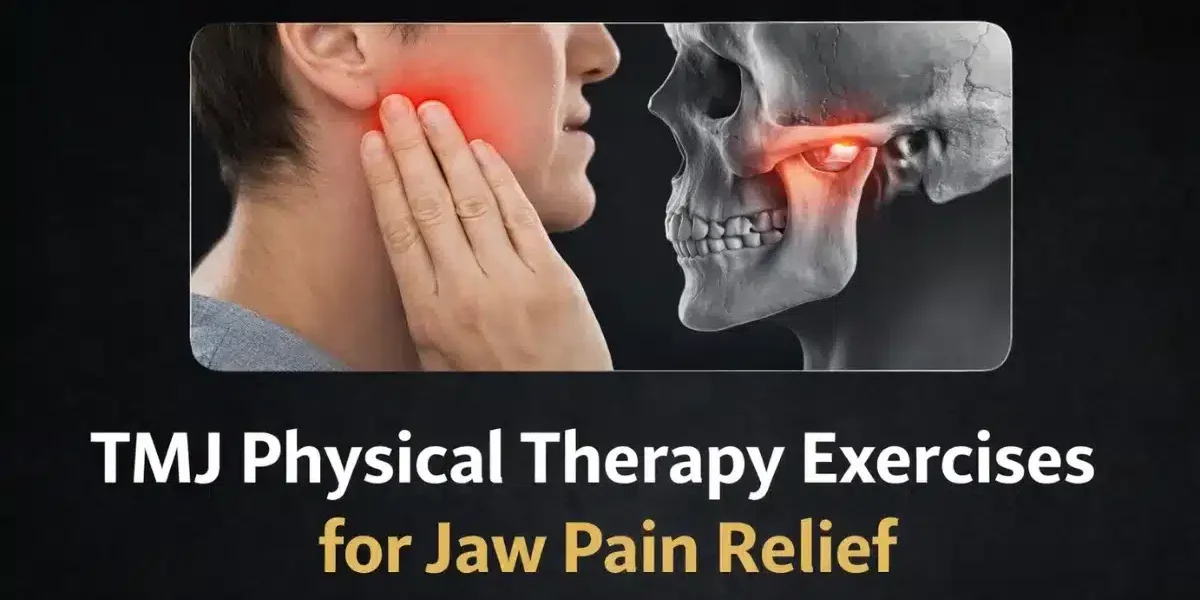
Jaw pain can slowly interfere with everyday life. It may start as mild tightness while chewing or a clicking sound near the ear. Over time, it can lead to headaches, facial soreness, difficulty opening the mouth fully, or discomfort while speaking. These symptoms are commonly linked to dysfunction of the temporomandibular joint, also known as TMJ.
For many patients, conservative care is the most effective first step. TMJ physical therapy exercises are designed to improve jaw movement, reduce muscle tension, and support joint stability. When used correctly, they can significantly improve comfort and function. Patients experiencing ongoing jaw discomfort often benefit from structured tmj pain relief approaches that combine exercises with professional dental evaluation.
This article explains how physical therapy tmj exercises work, when they are appropriate, how to perform them safely, and when additional dental care may be necessary.
What Is the Temporomandibular Joint?
The temporomandibular joint connects the lower jaw to the skull and sits just in front of each ear. It is responsible for all jaw movements, including opening, closing, chewing, and side-to-side motion.
Unlike most joints, the TMJ works constantly throughout the day. Because of this frequent use, even small imbalances can lead to strain over time.
Common contributors to TMJ problems include:
TMJ problems often develop gradually due to a combination of factors, including jaw clenching during stress, grinding teeth at night, poor posture such as a forward head position, muscle fatigue from prolonged talking or chewing, and dental changes that affect bite alignment.
According to guidance from the National Institute of Dental and Craniofacial Research, TMJ discomfort often develops gradually due to a combination of muscle tension and movement dysfunction rather than sudden injury.
Why TMJ Physical Therapy Exercises Are Effective
TMJ exercises focus on restoring natural movement patterns rather than forcing the jaw into extreme positions. The goal is to:
TMJ physical therapy exercises are effective because they help reduce muscle overactivity, improve coordination between jaw muscles, support joint stability, and encourage a relaxed resting posture.
Unlike medication, exercises address the mechanical causes of discomfort. Many patients notice improvements such as reduced jaw fatigue, fewer headaches, and smoother movement before pain fully resolves.
Clinical recommendations from organizations like the American Dental Association emphasize conservative, non-invasive therapies as first-line care for TMJ disorders.
When TMJ Physical Therapy Exercises Are Recommended
TMJ exercises are most helpful when symptoms are muscle-related and develop over time.
They are commonly recommended if you experience:
These exercises are commonly recommended for patients who experience jaw stiffness upon waking, soreness while chewing or speaking, clicking or popping without locking, or facial fatigue after long conversations.
Exercises are not intended for severe pain, sudden locking, or trauma-related symptoms. In these cases, professional evaluation is essential before beginning any home program.
Core TMJ Physical Therapy Exercises for Jaw Pain Relief
These tmj therapy exercise techniques are widely used by dental and physical therapy professionals. They should always feel gentle and controlled.
Relaxed Jaw Resting Position
Many people unconsciously keep their teeth touching throughout the day. This keeps jaw muscles engaged when they should be resting.
How to perform:
- Place the tongue lightly on the roof of the mouth behind the front teeth
- Allow teeth to remain slightly apart
- Keep lips closed and shoulders relaxed
- Hold briefly and release
Practicing this position throughout the day helps reduce clenching habits.
Controlled Jaw Opening
This exercise improves coordination and reduces uneven jaw movement.
Steps:
- Place one finger lightly on the chin
- Slowly open the mouth while monitoring for deviation
- Close gently without snapping teeth together
- Repeat a few times
Focus on smooth motion rather than opening wide.
Side-to-Side Jaw Movement
Limited lateral movement is common in TMJ dysfunction.
Steps:
- Place a clean tongue depressor between the front teeth
- Gently move the jaw left and right along the guide
- Keep movements small and controlled
- Remove the guide as coordination improves
This prevents overextension while restoring mobility.
Chin Tuck for Posture Support
Jaw health is closely linked to neck and head posture.
How to do it:
- Sit upright
- Gently pull the chin straight back
- Hold briefly, then relax
- Repeat several times
The Cleveland Clinic highlights posture correction as an important factor in reducing jaw strain when combined with jaw exercises.
How Often Should TMJ Exercises Be Done?
Consistency matters more than intensity.
Most patients benefit from:
For most patients, TMJ exercises are best performed once or twice daily in short sessions of five to ten minutes each, focusing on slow, controlled movements rather than intensity.
Doing too much too soon can worsen symptoms. Improvement usually occurs gradually over several weeks.
Common Mistakes That Delay TMJ Recovery
Avoid these frequent issues:
Common mistakes that can delay recovery include stretching the jaw aggressively, clenching teeth during exercises, ignoring posture while focusing solely on the jaw, and continuing exercises during pain flare-ups.
If discomfort increases, pause and seek professional guidance.
How Dental Conditions Can Affect TMJ Health
TMJ symptoms are often influenced by overall dental health. Bite alignment, tooth damage, and missing teeth can all increase joint strain.
Procedures such as tooth bonding, inlay or onlay restorations, or restoring a crown for a broken tooth can help stabilize the bite and reduce stress on the jaw.
Advanced restorative options like cerec same day crowns and porcelain/ceramic dental crowns allow precise bite correction while preserving natural tooth structure.
TMJ, Veneers, and Functional Balance
Patients considering cosmetic dentistry often ask how it affects jaw health. When planned properly, veneers can support both appearance and function.
Educational resources such as dental facings, clip-on teeth veneers, porcelain veneers before and after, and permanent veneers help patients understand treatment options while maintaining jaw stability.
TMJ Care and Comprehensive Dental Support
TMJ therapy may be part of a broader dental care plan. In some cases, treatment may involve:
- Imaging with cbct scan dental technology
- Support from family dental care
- Coordination with endodontic therapy when internal tooth health affects the bite
For complex cases, full mouth rehabilitation, removable partial dentures, overdenture locators, or an affordable dental bridge may help restore function and reduce jaw strain.
When to Seek Immediate Dental Attention
Sudden jaw locking, severe pain, swelling, or trauma may require dental urgent care. Prompt evaluation helps prevent long-term complications.
Frequently Asked Questions About TMJ Physical Therapy Exercises
Do TMJ exercises really help?
Yes, especially when symptoms are muscle-related, and exercises are performed consistently.
How long before I notice improvement?
Many patients notice reduced tension within weeks, with gradual improvement over time.
Can exercises replace professional TMJ treatment?
Exercises support recovery but do not replace diagnosis or personalized care.
Should exercises hurt?
No. Pain is a sign to stop and seek evaluation.
TMJ Care for Patients in Cedar Knolls, NJ
TMJ symptoms vary widely. Patients in Cedar Knolls and nearby communities benefit most from care tailored to their jaw mechanics, habits, and dental health.
A personalized approach ensures exercises are safe, effective, and adjusted as symptoms change.
Conclusion
TMJ physical therapy exercises play an important role in relieving jaw pain, improving movement, and preventing symptom progression. Gentle, consistent practice, combined with professional oversight, yields the most reliable results.
If jaw discomfort is affecting your quality of life, a professional evaluation can help determine the most effective next steps.
Book Your Consultation
Learn more about personalized TMJ care and comprehensive dental services at The Advanced Dental Center of Cedar Knolls, where patient comfort and long-term oral health come first.