If you’re considering replacing a missing tooth, one question probably comes up before anything else:
Are dental implants safe?
It’s a reasonable concern. After all, implant treatment involves placing a titanium post into the jawbone, and for many patients, that sounds like a significant procedure.
The good news is that dental implants have been used successfully for decades and are widely considered one of the safest and most predictable tooth replacement options available today. In fact, modern implant dentistry has become so reliable that millions of implants are placed worldwide every year with exceptionally high success rates.
That said, no dental procedure is completely without risk.
Understanding both the benefits and the potential drawbacks helps patients make informed decisions rather than relying on marketing claims or internet myths.
This guide explains the safety of dental implants, their long-term advantages, possible complications, and the real-world pros and cons of dental implants so you can better understand whether implant treatment is right for you.
What Are Dental Implants?
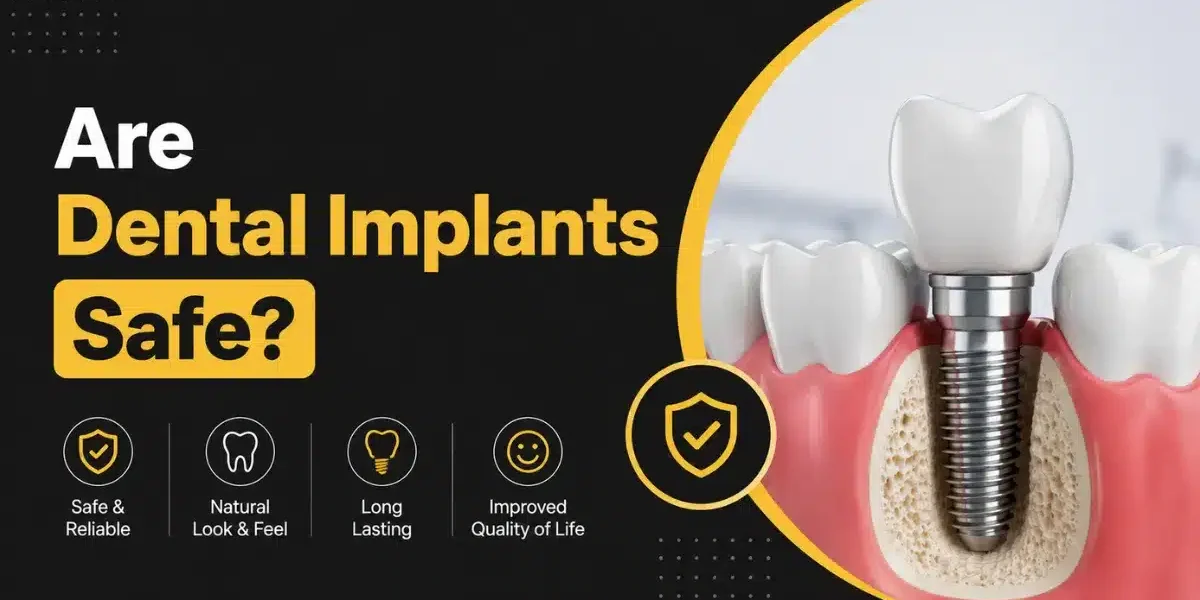
A dental implant is a small titanium post that replaces the root of a missing tooth. The implant is placed into the jawbone where it gradually bonds with surrounding bone through a natural biological process called osseointegration.
Once healing is complete, a custom restoration such as a crown, bridge, or denture is attached to the implant.
The completed restoration is designed to:
- Restore chewing ability
- Improve appearance
- Support speech
- Prevent bone loss
- Maintain facial structure
Many patients researching implants first explore the complete dental implant process step by step to better understand how treatment progresses from consultation to final restoration.
Understanding the process often helps patients feel more confident before beginning treatment.
Are Dental Implants Safe?
For most healthy patients, yes.
Dental implants are considered extremely safe when placed by qualified professionals using proper treatment planning and modern diagnostic techniques.
Titanium, the material most commonly used for implants, has been extensively studied in medicine and dentistry for decades. It is highly biocompatible, meaning the body generally accepts it very well.
The safety of implant treatment is supported by:
- Extensive clinical research
- Decades of successful use
- High long-term success rates
- Advanced imaging technology
- Improved surgical techniques
- Strict sterilization protocols
Modern treatment planning allows dentists to evaluate bone density, nerve locations, sinus anatomy, and implant positioning before surgery begins, significantly reducing risks and improving outcomes.
For properly selected patients, implant success rates often exceed 95%.
Why Dental Implants Are Considered One of the Best Tooth Replacement Options
Traditional tooth replacement methods can restore appearance, but implants provide something unique.
They replace the missing root as well as the visible tooth.
This distinction creates several important benefits.
Unlike removable appliances, implants become integrated with the jawbone and function similarly to natural teeth.
Because of this, they help preserve:
- Jawbone health
- Facial structure
- Bite stability
- Chewing function
- Long-term oral health
The ability to support bone preservation is one of the reasons implants are often considered the gold standard for replacing missing teeth.
Benefits of Dental Implants
When evaluating safety, it is important to consider the advantages alongside the risks.
The benefits extend far beyond appearance.
Natural Function
Dental implants allow patients to chew, speak, and smile with confidence.
Unlike removable options, they remain securely anchored within the jaw.
Most patients eventually forget they even have an implant because it feels so natural.
Bone Preservation
When a tooth is lost, the jawbone in that area begins to shrink over time.
Because implants stimulate the bone similarly to natural roots, they help reduce this bone loss.
Preserving bone structure can support both oral health and facial appearance in the long term.
Improved Comfort
Removable appliances can sometimes shift during eating or speaking.
Implants eliminate many of these concerns by providing stable support.
Patients often report increased confidence in social situations and daily activities.
Long-Term Durability
With proper care and maintenance, dental implants can provide many years of reliable function.
While restorations may occasionally require maintenance or replacement, the implant itself often remains stable for decades.
Protection of Adjacent Teeth
Traditional bridges may require modification of neighboring teeth.
Implants generally stand independently without relying on adjacent teeth for support.
This helps preserve healthy tooth structure.
Pros and Cons of Dental Implants
Every treatment has advantages and limitations.
Understanding the full picture helps patients make informed decisions.
| Pros of Dental Implants | Cons of Dental Implants |
| Natural appearance | Surgical procedure required |
| Strong chewing ability | Healing period needed |
| Preserves jawbone | Higher initial investment |
| Long-lasting solution | Not every patient qualifies immediately |
| Does not rely on neighboring teeth | Bone grafting may sometimes be necessary |
| Improved confidence | Requires excellent oral hygiene |
Most patients find that the long-term benefits outweigh the temporary inconveniences associated with treatment.
Still, discussing individual circumstances with a qualified provider is essential.
Understanding Dental Implants Drawbacks
While implants are highly successful, patients should understand the potential limitations honestly.
Some dental implant drawbacks relate to treatment itself, while others involve candidacy requirements.
For example, not everyone has sufficient bone volume immediately after tooth loss.
Some patients may require:
- Bone grafting
- Gum treatment
- Additional diagnostic imaging
- Longer healing periods
These factors do not necessarily prevent implant treatment, but they can influence timelines and planning.
Another consideration is patience.
Unlike some restorative options, implant treatment often involves several months of healing before the final restoration is placed.
Patients seeking the fastest possible solution may find the timeline challenging, although options such as same-day implants may be appropriate in certain situations.
Potential Risks Associated With Dental Implants
Even though implant treatment is considered safe, every surgical procedure carries some degree of risk.
Potential complications may include:
- Infection
- Delayed healing
- Implant failure
- Nerve irritation
- Sinus complications (upper jaw implants)
- Inflammation around the implant
Fortunately, serious complications are relatively uncommon when treatment is carefully planned and performed by experienced professionals.
The vast majority of patients heal without significant problems.
Infection Risks and Prevention
One concern patients often have is infection.
While infection is possible after any surgical procedure, it is generally preventable through proper care.
Reducing risk involves:
- Following post-operative instructions
- Maintaining good oral hygiene
- Attending follow-up appointments
- Avoiding smoking
- Managing medical conditions appropriately
Patients who care for their implants properly significantly improve their chances of long-term success.
Can Dental Implants Fail?
This is another common question.
While implant failure is possible, it is relatively uncommon.
Most failures occur because of factors such as:
- Smoking
- Uncontrolled diabetes
- Poor oral hygiene
- Severe grinding habits
- Untreated gum disease
- Insufficient bone support
Early failures usually occur during the healing phase before the implant fully integrates with the bone.
Late failures often result from long-term inflammation or inadequate maintenance.
The good news is that careful planning and regular dental care dramatically reduce these risks.
Who Is a Good Candidate for Dental Implants?
Many adults qualify for implant treatment.
Ideal candidates generally have:
- Healthy gums
- Adequate bone support
- Good oral hygiene habits
- Stable overall health
- Commitment to follow-up care
Even patients who initially appear unsuitable may become candidates after additional treatment.
Bone grafting, periodontal therapy, and other preparatory procedures can often create favorable conditions for successful implant placement.
Lifestyle Factors That Affect Implant Safety
Patient habits play an important role in treatment success.
Certain behaviors can increase complication risks.
Smoking
Smoking is one of the most significant risk factors for implant complications.
It can interfere with blood flow, healing, and bone integration.
Teeth Grinding
Excessive grinding may place additional stress on implants.
Protective appliances may be recommended for some patients.
Oral Hygiene
Daily brushing, flossing, and professional cleanings remain essential after implant placement.
Implants cannot develop cavities, but surrounding tissues still require proper care.
The Role of Modern Technology in Implant Safety
One reason implant treatment has become increasingly predictable is the advancement of digital technology.
Modern dentists can use:
- CBCT imaging
- Digital treatment planning
- Surgical guides
- Three-dimensional diagnostics
- Advanced restorative materials
These technologies improve accuracy and reduce surgical uncertainty.
They also allow dentists to identify potential challenges before treatment begins.
Patients who value comprehensive smile improvement often explore additional cosmetic procedures alongside implant treatment, including how to get perfectly white teeth as part of a complete smile enhancement plan.
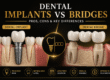
Dental Implants vs Other Tooth Replacement Options
When evaluating safety, it helps to compare implants with alternatives.
| Treatment Option | Advantages | Limitations |
| Dental Implants | Bone preservation, stability, longevity | Surgical procedure required |
| Bridges | Faster treatment | May affect adjacent teeth |
| Dentures | Lower upfront treatment complexity | Can shift and require adjustments |
Each option serves a purpose.
However, implants often provide the closest replacement to a natural tooth in terms of function and preservation.
What Patients Often Worry About Most
Interestingly, many concerns about implants focus on issues that rarely become major problems.
Patients frequently worry about:
- Surgical discomfort
- Implant rejection
- Long-term complications
- Appearance
- Recovery time
Most of these concerns can be addressed during a thorough consultation.
In reality, many patients report that treatment was far easier than anticipated.
Some individuals comparing restorative procedures also ask questions, such as whether getting a crown is painful because crowns are often incorporated into the final implant restoration after healing.
Understanding the entire treatment process helps reduce anxiety and improve confidence before surgery.
Long-Term Success and Maintenance
Dental implants are not maintenance-free.
Like natural teeth, they require consistent care.
Successful long-term maintenance includes:
- Daily brushing
- Daily flossing
- Regular dental examinations
- Professional cleanings
- Monitoring for grinding habits
Patients who commit to these habits often enjoy excellent long-term outcomes.
Many implants continue functioning successfully for decades.
Frequently Asked Questions
Are dental implants safe for most adults?
Yes. Dental implants are considered safe and highly predictable for most healthy adults with adequate bone support and healthy gums.
What are the biggest risks of dental implants?
Potential risks include infection, delayed healing, implant failure, and inflammation around the implant. Serious complications are relatively uncommon.
What are the pros and cons of dental implants?
The pros include durability, bone preservation, natural function, and improved appearance. The cons include surgery, healing time, and the possibility of additional procedures such as bone grafting.
Can the body reject dental implants?
True rejection is extremely rare. Most complications are related to healing, infection, or other factors rather than an immune rejection response.
How long do dental implants last?
With proper care and maintenance, dental implants can remain functional for many years and often decades.
Are dental implants safer than bridges?
Both treatments are considered safe, but implants offer advantages such as bone preservation and avoiding modification of adjacent teeth.
Final Thoughts
So, are dental implants safe?
For the vast majority of qualified patients, the answer is yes.
Modern implant dentistry has a long track record of safety, predictability, and success. While every procedure carries some level of risk, careful planning, advanced technology, proper patient selection, and good oral hygiene help make complications uncommon.
When evaluating the pros and cons of dental implants, many patients find that the benefits- improved function, bone preservation, natural appearance, and long-term stability far outweigh the potential drawbacks.
If you are considering dental implants in Cedar Knolls, a comprehensive consultation can help determine whether implant treatment is appropriate for your specific needs and long-term oral health goals.