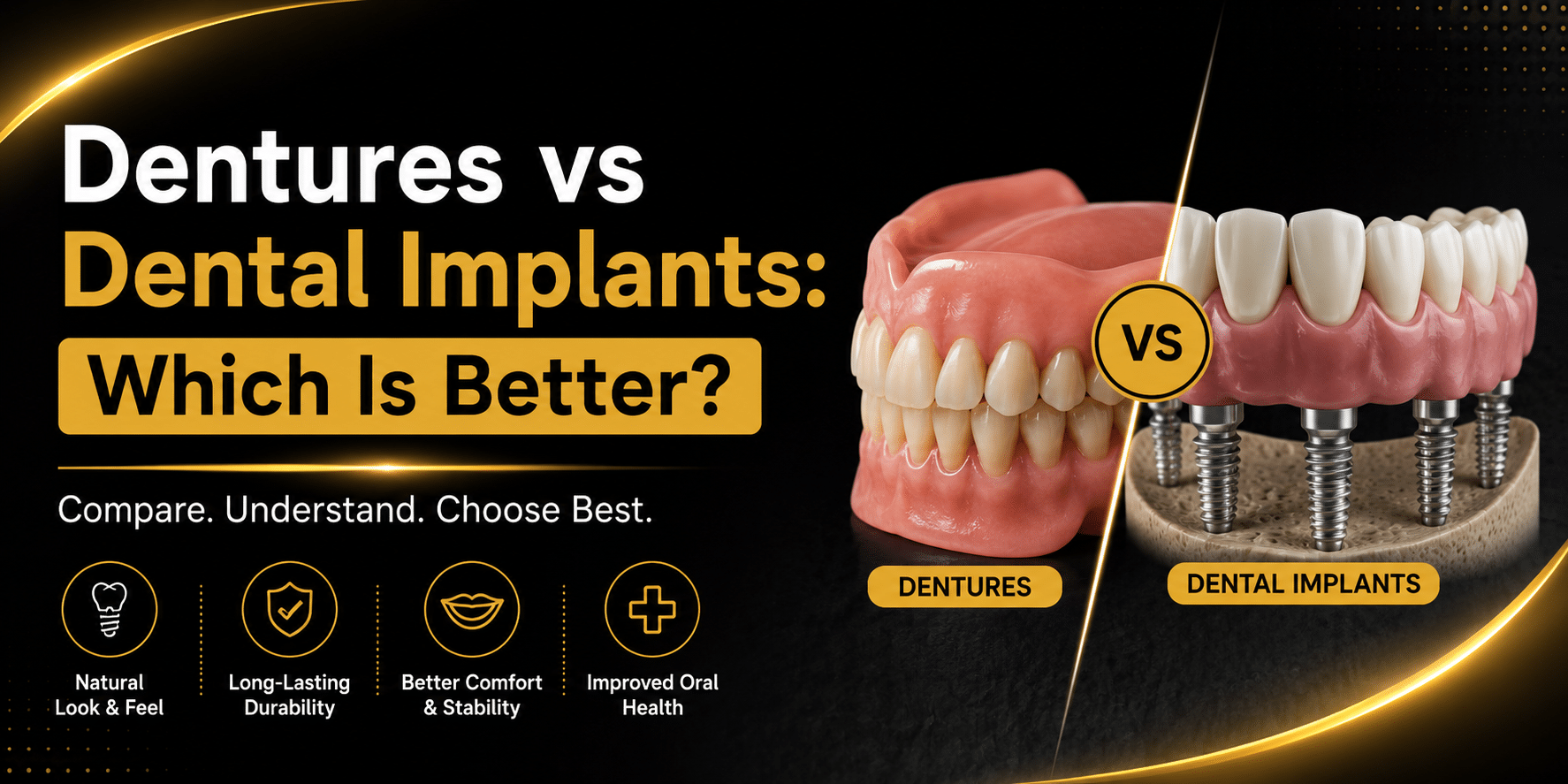
For most patients, dentures vs dental implants is not a simple matter of choosing the “better” treatment. Dental implants generally provide greater stability, a more natural chewing experience, and long-term support for the jawbone, while dentures can be a practical option for replacing several or all missing teeth without implant surgery. The right choice depends on your oral health, bone availability, number of missing teeth, medical history, preferences, and long-term goals. This guide compares dentures and dental implants so you can understand how they differ in stability, appearance, maintenance, comfort, longevity, and overall treatment considerations.
What Are Dental Implants?
Dental implants are artificial tooth roots designed to support replacement teeth. An implant is typically made from a biocompatible material such as titanium and is surgically placed into the jawbone. After healing, the implant can support a dental crown, bridge, or implant-supported denture.
Unlike traditional dentures, implants are anchored to the jaw rather than resting directly on the gums. This can make a significant difference when eating, speaking, and carrying out everyday activities.
The implant itself does not look like a natural tooth because it sits beneath the gum. The visible restoration, such as a crown or denture, is designed to replace the missing portion of the tooth or teeth.
A major advantage of implants is that they can help preserve the jawbone in the area where a tooth has been lost. Natural tooth roots stimulate the surrounding bone during chewing. After tooth loss, that stimulation decreases and the bone can gradually shrink. An implant can provide stimulation through the jaw in a way that traditional removable dentures cannot.
What Are Dentures?
Dentures are removable dental appliances designed to replace missing teeth and surrounding oral tissues. Depending on the extent of tooth loss, a patient may receive partial dentures or complete dentures.
Partial dentures replace some missing teeth while fitting around the remaining natural teeth. Complete dentures replace an entire upper or lower arch of teeth.
Modern dentures can be designed to look natural and fit more comfortably than older styles. However, because conventional dentures generally rest on the gums, they can move slightly during chewing or speaking, particularly when the fit changes over time.
The shape of the jaw can change following tooth loss. As the supporting bone gradually remodels, a denture that initially fits well may become loose. Regular dental evaluations can help determine whether the denture needs adjustment, relining, or replacement.
Dentures vs Dental Implants: Key Differences
The biggest distinction between these treatments is how the replacement teeth are supported.
Dental implants are anchored within the jawbone. Conventional dentures are removable and primarily supported by the gums and underlying tissues.
| Feature | Dental Implants | Traditional Dentures |
| Support | Anchored to the jawbone | Rests on gums and oral tissues |
| Removable | Usually fixed, depending on restoration | Yes |
| Stability | Generally very stable | Can move, especially if poorly fitted |
| Bone preservation | Helps maintain bone around the implant | Does not prevent normal post-tooth-loss bone loss |
| Chewing | Usually closer to natural teeth | May require adjustment to certain foods |
| Maintenance | Daily brushing and professional care | Daily cleaning and periodic adjustments |
| Treatment process | Requires surgery and healing | Generally does not require implant surgery |
| Longevity | Can provide long-term service with proper care | May require replacement or adjustment over time |
Neither option is automatically right for every patient. A dentist must evaluate the mouth, remaining teeth, gums, bone, and overall circumstances before recommending treatment.
Which Looks More Natural?
Both modern dentures and implant restorations can be designed to look natural. The difference is often less about appearance alone and more about how securely the restoration stays in place.
A well-made denture can restore the appearance of missing teeth and provide support for the lips and cheeks. The teeth can be selected and shaped to complement the patient’s facial features.
Implant-supported restorations also allow considerable control over tooth shape, size, shade, and positioning. Because the restoration is supported by implants, it is less dependent on suction and gum contact for stability.
For patients concerned about movement, implants may offer an additional advantage. A restoration that stays securely positioned can help create a more confident appearance during speaking and smiling.
Which Is More Comfortable?
Comfort depends heavily on the individual and the quality of the treatment.
New dentures can require an adjustment period. Patients may initially notice pressure, increased saliva, or difficulty speaking certain sounds. The mouth usually needs time to adapt to the appliance.
Some people become very comfortable wearing dentures, while others continue to experience movement or irritation. A poor-fitting denture can contribute to sore spots and discomfort, which is why professional adjustments are important.
Dental implants also require an adjustment period, particularly because implant placement involves a surgical procedure. Once healing is complete and the final restoration is fitted, many patients appreciate the stability implants provide.
Comfort should therefore be evaluated over the entire treatment process rather than based only on the first few days or weeks.
Which Is Better for Eating?
One of the most important differences between dentures and implants is chewing stability.
Traditional dentures can restore much of a person’s ability to eat, but patients may need time to learn how to chew comfortably with them. Certain hard, sticky, or very chewy foods can be challenging, particularly if the denture moves.
Dental implants are anchored in the jaw, so they generally provide greater stability. This can make chewing feel more natural compared with a removable denture.
However, implant treatment does not mean that every patient can immediately eat every type of food without limitation. The condition of the restoration, number of implants, bite, bone support, and overall oral health all matter.
For patients whose main priority is a secure chewing experience, implant-supported treatment may be particularly appealing.
How Long Do Dental Implants and Dentures Last?
Longevity varies significantly from person to person.
Dental implants are designed to be a long-term tooth replacement solution. Their success depends on factors such as oral hygiene, bone support, gum health, smoking status, bite forces, and regular dental care.
The implant itself and the visible restoration are also different components. While an implant can remain functional for many years, the crown, bridge, or denture attached to it may eventually need repair or replacement because dental materials can wear over time.
Dentures are also not necessarily permanent. Normal changes in the gums and jawbone can affect their fit. The denture teeth and acrylic materials can wear, chip, or become damaged.
Regular dental examinations help determine whether a denture continues to fit properly or whether it needs adjustment or replacement.
Advantages of Dental Implants
Dental implants have become a widely used option for replacing missing teeth because they address both the visible tooth and the missing root structure.
Some potential advantages include:
- Strong stability during chewing and speaking.
- A restoration that can closely resemble natural teeth.
- Support for implant-retained dentures or fixed restorations.
- Preservation of bone around the implant site.
- No need to remove a fixed implant restoration for routine daily use.
These benefits do not mean implants are appropriate for everyone. Successful treatment requires sufficient bone and healthy tissues, and some patients may need preliminary treatment before implants can be placed.
Advantages of Dentures
Dentures remain an important tooth replacement option because they can replace multiple missing teeth without placing implants into the jaw.
They can be particularly useful when a patient is not a candidate for implant surgery or prefers a removable treatment.
Modern dentures can restore the appearance of missing teeth and provide functional improvement. They can also be adjusted or replaced as the mouth changes over time.
For some patients, dentures may offer a simpler treatment pathway. For others, an implant-supported denture may provide the additional stability they want.
What Happens During a Dental Implant Consultation?
An implant consultation generally begins with an assessment of the mouth and remaining teeth. Your dentist may examine the gums, bite, jawbone, and areas where teeth are missing.
Diagnostic imaging can help evaluate bone structure and important anatomical features. For more complex cases, three-dimensional imaging may provide additional information for treatment planning.
Your dentist can then explain whether individual implants, an implant-supported bridge, an overdenture, or another restoration may be appropriate.
If dentures are being considered, the dentist can similarly assess the shape of the gums, available support, bite, and remaining teeth before recommending the appropriate type of denture.
The goal is not simply to replace missing teeth. It is to create a restoration that functions comfortably and fits the patient’s oral anatomy.
Frequently Asked Questions
Are dental implants better than dentures?
Dental implants may provide greater stability and a more natural chewing experience, while dentures offer a removable approach to replacing missing teeth. The better option depends on oral health, bone support, treatment preferences, and individual circumstances.
Are dentures cheaper than dental implants?
The initial treatment requirements can differ considerably between dentures and implants, so there is no single answer for every patient. Implant treatment may involve multiple stages, while dentures can require future adjustments or replacement. A dentist can provide an individualized treatment estimate.
Can dental implants support dentures?
Yes. Dental implants can be used to stabilize removable dentures. These are commonly called implant-supported overdentures. The implants provide additional retention and can reduce unwanted denture movement.
Can I get dental implants if I have worn dentures for years?
Possibly. Long-term denture use can be associated with changes in the jawbone, but this does not automatically prevent implant treatment. An examination and appropriate imaging are needed to determine whether there is enough bone and whether additional treatment is required.
Are dental implants painful?
Implant placement is performed using anesthesia, so patients should not feel the surgical procedure itself. Some soreness, swelling, or discomfort can occur during the healing period. Your dental professional will provide appropriate aftercare instructions.
Are upper dentures suitable for dental implants?
Yes. Dental implants can sometimes be used to stabilize upper dentures or support other types of upper-arch restorations. The appropriate design depends on bone availability, anatomy, and the patient’s treatment goals.
How do I know which option is right for me?
A dental examination is the best way to compare your options. Your dentist can assess your gums, jawbone, remaining teeth, bite, and overall oral condition before explaining the advantages and limitations of each treatment.
The Bottom Line: Dentures vs Dental Implants
The choice between dentures vs dental implants comes down to more than appearance or convenience. Traditional dentures can be an effective removable solution for replacing missing teeth, while dental implants offer anchorage within the jaw and can provide greater stability.
Implant-supported dentures can provide another option for patients who want the removability of dentures with additional support from implants. For upper-arch tooth loss, dental implants for upper dentures may also be considered when conventional denture stability is not sufficient.
There is no universal treatment that is best for every patient. A professional evaluation can help determine whether conventional dentures, implant-supported dentures, or another implant restoration makes the most sense for your oral health and long-term goals.
If you are replacing missing teeth or are unhappy with the stability of your current dentures, schedule an evaluation with a qualified dental professional. A personalized examination is the best starting point for choosing a comfortable and functional solution.