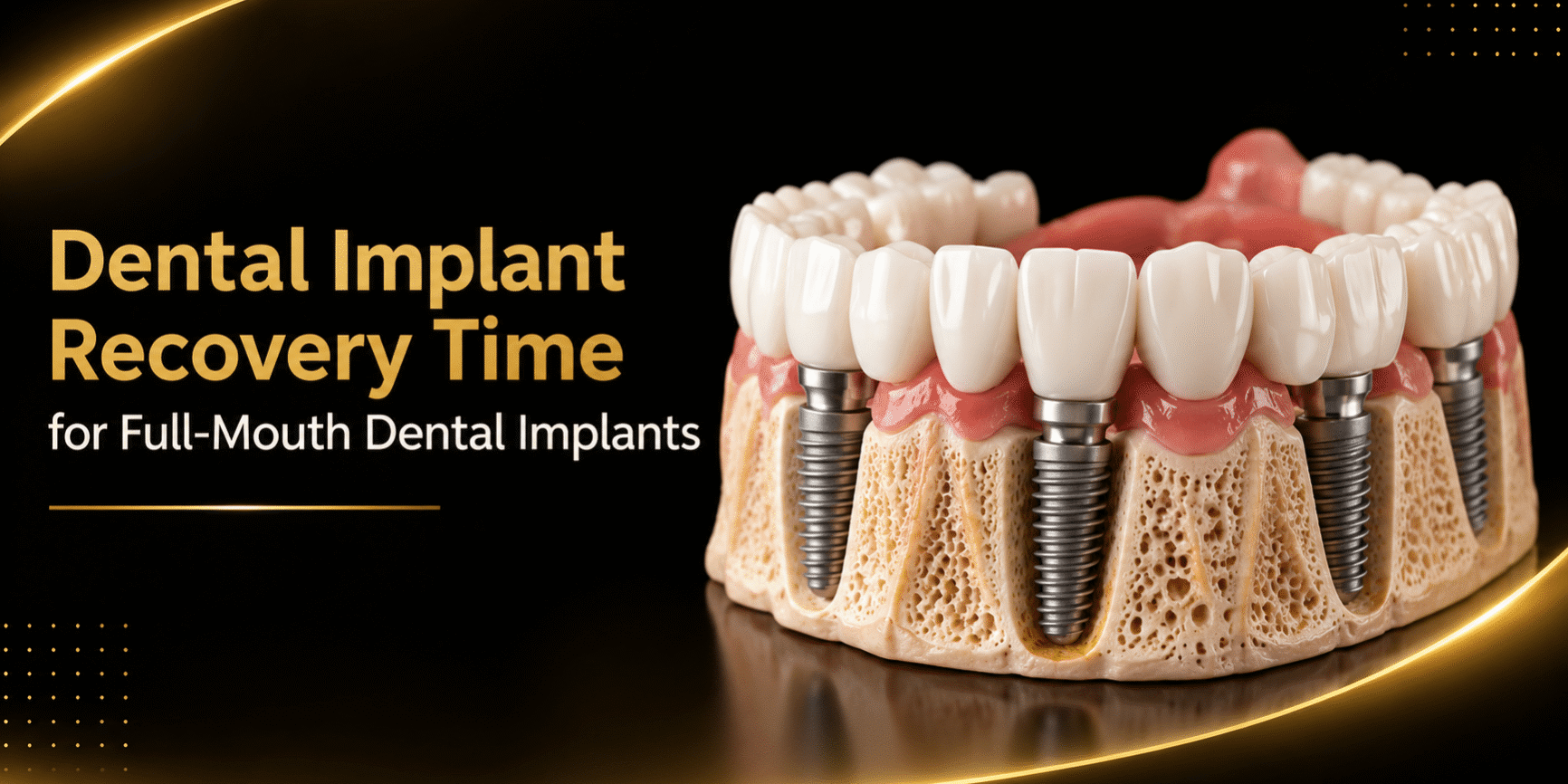
The dental implant recovery time for full-mouth dental implants usually involves two different phases: early recovery of the gums and a much longer period of bone healing. Many patients feel noticeably better within 1 to 2 weeks, but complete osseointegration, where the jawbone bonds with the implants, can take around 3 to 6 months or longer in some cases. The timeline depends on the number of implants, bone condition, whether extractions or grafting are needed, and how the mouth responds to treatment. Knowing what to expect at each stage can make the recovery process easier to manage.
How Long Does Full-Mouth Dental Implant Recovery Take?
There is no single recovery period that applies to every patient. Full-mouth implant treatment can involve several implants placed in the upper jaw, lower jaw, or both, so recovery may be more involved than it is after a single implant.
The first few days are generally when swelling, tenderness, and minor bleeding are most noticeable. These symptoms typically begin to settle as the soft tissues heal. However, the implant itself continues healing beneath the gums.
A general timeline looks like this:
| Recovery stage | Approximate timeframe | What to expect |
| Immediate recovery | First 24 to 48 hours | Swelling, tenderness, minor bleeding, and fatigue may occur |
| Early healing | Days 3 to 7 | Discomfort and swelling generally begin to improve |
| Soft-tissue healing | 1 to 2 weeks | Gums become more comfortable and stable |
| Bone healing | 1 to 3 months | Bone continues developing around the implants |
| Osseointegration | About 3 to 6 months | Implants gradually become firmly integrated with the jawbone |
| Final restoration | After adequate healing | Permanent teeth may be placed when clinically appropriate |
These are general estimates, not fixed deadlines. Some patients progress faster, while others need additional healing time.
For a related explanation of the overall process, see dental implant recovery time and healing process.
Why Full-Mouth Dental Implants May Take Longer to Recover
Replacing or supporting an entire arch involves more treatment than placing a single implant. Several surgical sites may need to heal at the same time, and some patients require additional procedures before or during implant placement.
The recovery timeline may be affected by:
- The number and location of implants
- Tooth extractions performed during treatment
- Jawbone density and volume
- Bone grafting or other preparatory procedures
- The type of temporary or permanent restoration
- Oral hygiene during recovery
- Tobacco use
- Individual healing response
The condition of the jawbone is particularly important. Implants need adequate bone support for predictable healing. If there has been significant bone loss, additional treatment may be necessary before an implant can be fully supported.
Patients interested in this situation can learn more about dental implants with bone loss.
Dental Implants Recovery Time: What Happens During Each Stage?
The First 24 to 48 Hours
The first couple of days are mainly about protecting the surgical sites and allowing the initial healing response to begin.
Swelling, soreness, pressure, and mild bleeding can occur. Swelling may become more noticeable during the first two or three days before gradually improving.
Your dental professional may provide instructions regarding medication, eating, cleaning your mouth, and physical activity. These instructions should take priority over general advice found online because your treatment may have specific requirements.
Rest is also useful during this period. Avoid strenuous exercise or activities that could place unnecessary stress on your body until your dental team advises that they are appropriate.
Days 3 to 7
By the middle of the first week, many patients begin noticing that swelling and discomfort are improving. The gums are still healing, however, so it is important not to treat reduced soreness as a sign that the implants are completely healed.
Eating may require some adjustment, especially after full-mouth treatment. Softer foods are generally easier to manage during early recovery.
Cleaning the mouth also needs care. Your dentist or hygienist can explain how to maintain oral hygiene around the surgical areas without interfering with healing tissue.
The Second Week
During the second week, the soft tissues usually become more comfortable. Depending on the extent of surgery, many patients can gradually return to their normal routines.
You may still need to avoid certain foods or activities. If temporary teeth were provided, your dentist may also give specific instructions about how much biting force they should receive.
At this point, the mouth can look and feel considerably better while the implants are still undergoing deeper biological healing.
One to Three Months
This is when the focus shifts from surface healing to the bone surrounding the implants.
The process of osseointegration involves the jawbone developing a stable connection with the implant surface. Unlike gum healing, this process cannot be judged simply by how the mouth feels.
There is no sensation that tells you exactly when osseointegration is complete. Follow-up appointments allow your dental team to assess healing and decide when the next stage of treatment is appropriate.
You can also review the different dental implant healing stages to understand how healing progresses beneath the gum tissue.
Three to Six Months and Beyond
Many traditional implant cases require several months for adequate bone integration before the final restoration is placed.
The exact timing varies according to implant location, bone quality, surgical complexity, and individual healing. If bone grafting was performed, the overall timeline may be extended.
Some patients receive temporary teeth while healing takes place. Others follow a staged treatment plan in which permanent restorations are placed after the implants have demonstrated sufficient stability.
How Long Does It Take for Dental Implants to Heal Completely?
The answer depends on what you mean by “heal.”
If you mean when the gums stop feeling sore and daily activities become easier, the recovery may take only a couple of weeks. If you mean when the implant has fully integrated with the surrounding jawbone, the process usually takes several months.
So, how long does it take for dental implants to heal? For many patients, approximately 3 to 6 months is a useful general estimate for osseointegration, but individual treatment timelines vary.
The implant’s location, bone condition, surgical technique, and whether additional procedures were performed can all affect healing.
This is also why a patient should not assume that an implant is fully healed simply because there is little or no pain. Comfort and biological integration are different milestones.
What Is the Recovery Time for Dental Implants After Extraction?
Some full-mouth implant cases involve removing teeth that cannot be preserved. An implant may sometimes be placed during the same treatment appointment as an extraction, while other situations require the extraction site to heal before implant placement.
The timeline depends on factors such as infection, bone condition, extraction complexity, and whether bone preservation or grafting is required.
If your treatment involves an extraction followed by implant placement, dental implants after extraction provides additional information about the general treatment timeline.
Does Full-Mouth Implant Surgery Hurt During Recovery?
Some discomfort is expected after implant surgery, although the experience varies between patients.
Tenderness, swelling, pressure, and sensitivity are common during the early recovery period. The extent of discomfort can depend on how many implants were placed and whether extractions, grafting, or other procedures were performed.
Most importantly, symptoms should generally move in the direction of improvement. Increasing or severe pain deserves attention, particularly when accompanied by swelling, fever, discharge, or other unusual symptoms.
For a closer look at the subject, are dental implants painful addresses common questions about discomfort before and after implant treatment.
Eating During Full-Mouth Dental Implant Recovery
Eating can be one of the biggest adjustments after full-mouth implant surgery. The goal during early recovery is to avoid unnecessary pressure on healing areas while still maintaining adequate nutrition.
Soft foods are often easier to manage during the first stage of recovery. Depending on your treatment, your dentist may recommend avoiding very hot, hard, crunchy, sticky, or difficult-to-chew foods.
As the tissues heal and your dental professional gives you clearance, you can gradually return to a broader range of foods.
For practical food guidance, see what to eat after dental implant surgery.
How to Support a Smooth Recovery
Good aftercare does not make the biological healing process happen instantly. It does, however, help protect the surgical areas and reduce avoidable problems.
Follow your dental team’s instructions about cleaning, medications, food, physical activity, and follow-up visits.
Other useful habits include:
- Avoid smoking and tobacco products during healing.
- Keep your mouth clean according to your dentist’s instructions.
- Do not put excessive biting pressure on healing implants.
- Attend all recommended follow-up appointments.
- Take prescribed medications exactly as directed.
Long-term implant care also matters after the initial recovery period. Dental implant aftercare explains habits that can help protect implant health after surgery.
What Can Delay Dental Implant Healing?
Some circumstances can make dental implants recovery time longer than expected.
Bone Grafting
If the jaw does not have enough bone to support an implant, bone grafting may be recommended. The graft needs time to heal and develop adequate support, which can extend the overall treatment schedule.
Smoking and Tobacco
Tobacco use can interfere with normal healing and increase the risk of complications around dental implants. Patients who smoke should discuss this with their dental professional before treatment.
Poor Oral Hygiene
Plaque and bacterial buildup can contribute to inflammation around healing tissues. Following the oral hygiene routine recommended by your dental team is therefore an important part of recovery.
Complex Treatment
Full-mouth treatment may combine extractions, multiple implants, temporary restorations, grafting, or other procedures. Each part of the treatment can influence the final timeline.
When Can You Return to Normal Activities?
Returning to normal activities depends on how extensive the surgery was and how your recovery is progressing.
Many patients can resume ordinary, non-strenuous activities within several days, while more demanding physical activity may need to wait longer.
Your dentist may provide individualized restrictions based on the number of implants placed and whether additional surgical procedures were performed.
The same principle applies to eating. Being able to chew does not necessarily mean the implants are ready to withstand unrestricted biting forces.
How Follow-Up Appointments Affect the Recovery Timeline
Follow-up visits are an important part of implant treatment because they allow your dental professional to monitor healing rather than relying only on symptoms.
The dentist may examine the gums, check the surgical areas, assess implant stability, and determine whether healing is progressing appropriately.
These visits can also help determine when temporary restorations can be adjusted or when permanent teeth may be placed.
The dental implant process can vary considerably from one patient to another, so your personal treatment plan is the most reliable source for your expected timeline.
Full-Mouth Dental Implants vs. a Single Implant Recovery
Full-mouth treatment can involve a larger surgical area and multiple implants, so the initial recovery may feel more involved than recovery from one implant.
However, treating several missing teeth as part of one coordinated plan can also mean that multiple steps are managed within the same overall treatment process.
The key factor is not simply how quickly the mouth feels normal. The implants need enough time to integrate with the jawbone before they are subjected to the level of function expected from the final restoration.
Frequently Asked Questions
How long is the dental implant recovery time for full-mouth implants?
Initial recovery commonly takes about 1 to 2 weeks, while complete bone integration may take approximately 3 to 6 months or longer depending on the patient’s treatment and healing.
How long does it take for dental implants to heal completely?
The gums may become comfortable within a couple of weeks, but osseointegration usually takes several months. Your dentist determines when healing is sufficient for the next treatment stage.
Can I eat normally after full-mouth dental implants?
Usually, eating needs to be modified during the early recovery period. Soft foods are often easier, and your dentist will tell you when you can gradually return to firmer foods.
Is swelling normal after full-mouth implant surgery?
Yes. Swelling is common after implant surgery and can become more noticeable during the first few days. It should generally begin to improve afterward.
What can make dental implants heal more slowly?
Bone grafting, smoking, poor oral hygiene, complex surgery, inadequate bone, and individual healing differences can affect recovery time.
When can I return to exercise after dental implant surgery?
The timing depends on the extent of surgery. Light daily activity may resume relatively soon, while strenuous exercise may need to be postponed. Follow your dental team’s instructions.
Does having no pain mean my implants are fully healed?
No. Pain relief reflects soft-tissue recovery and comfort, while osseointegration is a deeper biological process that can continue for several months.
Final Thoughts on Dental Implant Recovery Time
The dental implant recovery time for full-mouth treatment is best understood as a gradual process rather than a single number. Many patients experience the most noticeable recovery during the first 1 to 2 weeks, but the implants can continue integrating with the jawbone for several months.
Following your dentist’s instructions, protecting healing areas, maintaining appropriate oral hygiene, avoiding tobacco, choosing suitable foods, and attending follow-up visits can all help support a healthy recovery.
If you are considering full-mouth dental implants or are currently healing after treatment, discuss your expected milestones with your dental professional. An individual evaluation can provide a much more accurate recovery timeline based on your implants, bone condition, and overall treatment plan.