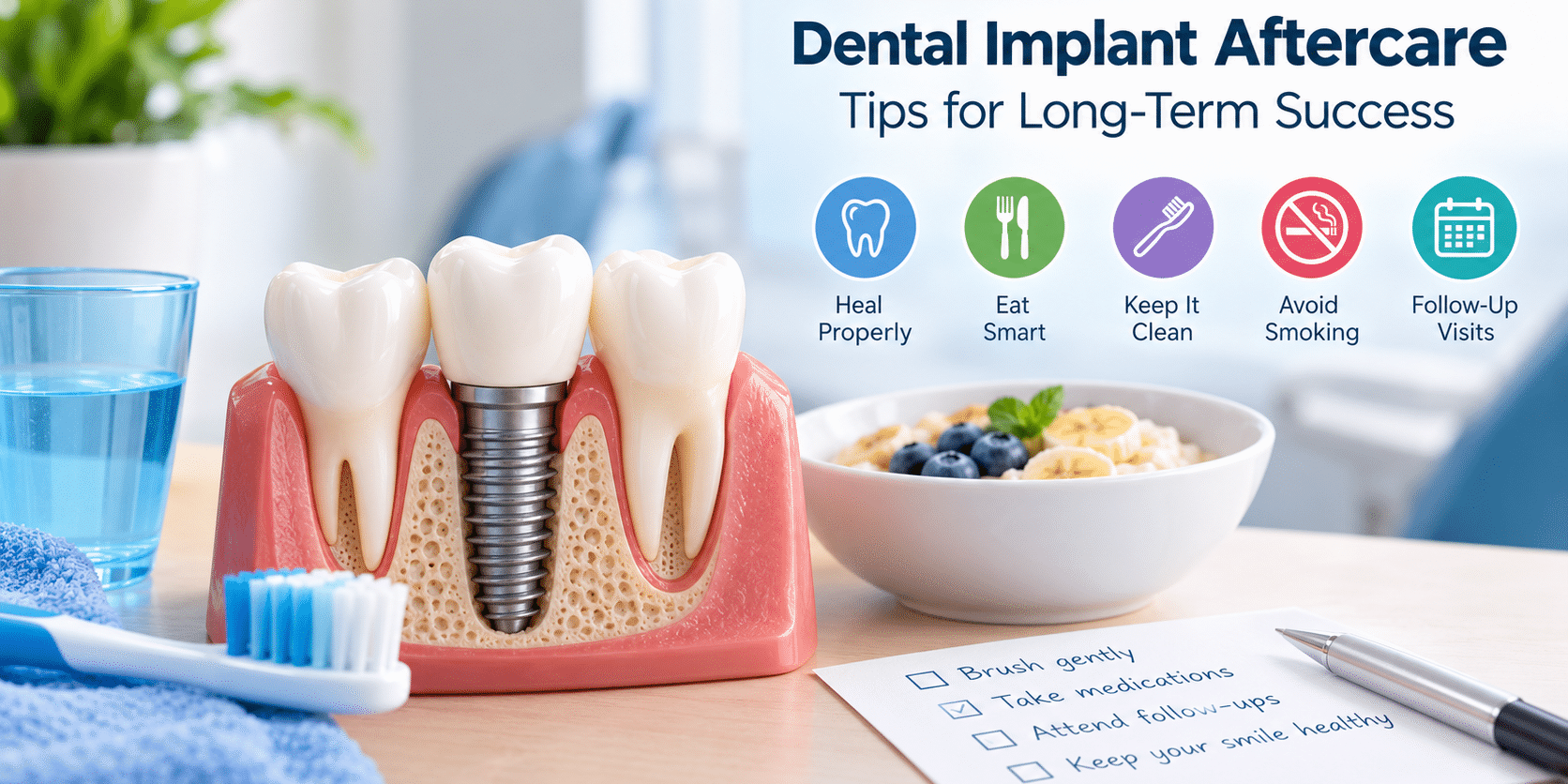
Successful dental implants depend on more than the procedure itself. Proper dental implant aftercare helps protect the surgical site, support healing, and give the implant the best opportunity to integrate with the jawbone. In the first few days, patients need to focus on protecting the area, controlling swelling, maintaining appropriate oral hygiene, and following their dentist’s instructions. Over the following weeks and months, careful cleaning and regular dental visits become essential for maintaining healthy gums and the tissues around the implant. This guide explains what to do after implant surgery, what to avoid, how healing progresses, and how to protect your implant for the long term.
Why Dental Implant Aftercare Matters
A dental implant is designed to function much like the root of a natural tooth. The implant is placed into the jawbone, where the surrounding bone gradually bonds with its surface through a process called osseointegration.
That healing process does not happen overnight. The gum tissue may begin recovering relatively quickly, but the bone surrounding the implant needs additional time to stabilize it. During this period, excessive pressure, poor oral hygiene, smoking, or failure to follow post-operative instructions can interfere with healing.
Good aftercare has two goals: protecting the surgical area during early healing and maintaining the health of the implant once it becomes part of your long-term oral function.
The exact instructions can vary depending on whether you had a single implant, multiple implants, bone grafting, sinus augmentation, or another procedure at the same time. Your dentist’s specific instructions should always take priority over general aftercare advice.
What to Expect Immediately After Dental Implant Surgery
It is normal to experience some soreness, swelling, minor bleeding, or tenderness after implant surgery. These symptoms generally improve as the first few days pass.
The surgical area may feel different from the surrounding tissues, particularly while the anesthesia wears off. Some patients also notice mild bruising or temporary difficulty chewing comfortably.
The first 24 hours are particularly important because the tissues are beginning to form a protective blood clot and start the healing process.
The First 24 Hours
Your dentist may recommend resting for the remainder of the day and avoiding strenuous physical activity. If bleeding occurs, gentle pressure with clean gauze may be recommended according to your dentist’s instructions.
Cold compresses can help reduce swelling when used as directed. Rather than placing ice directly against the skin, use a wrapped cold pack for short periods.
Eating also requires some care. Choose soft, comfortable foods and avoid chewing directly over the implant site. Extremely hot foods and drinks may be uncomfortable while the tissues are sensitive.
Do not repeatedly touch the surgical area with your fingers or tongue. Even though it can be tempting to check the area, unnecessary contact can irritate healing tissues.
The First Few Days
Swelling often becomes more noticeable during the first several days before gradually improving. Some soreness is also expected.
Continue taking prescribed or recommended medications exactly as directed. If your dentist has prescribed an antibiotic, complete the medication according to the instructions rather than changing the schedule on your own.
As your mouth becomes more comfortable, gradually return to your normal diet unless your dental team has given you different instructions.
Post Dental Implant Care: What Should You Eat?
Nutrition plays a supporting role in recovery. Your body needs adequate protein, calories, vitamins, minerals, and fluids to repair tissues.
For the initial healing period, softer foods are often easier to eat because they require less chewing and place less pressure on the surgical area.
Suitable options may include yogurt, eggs, oatmeal, mashed vegetables, soft pasta, smoothies consumed without a straw when advised, cottage cheese, and other foods that are comfortable for you.
As healing progresses, you can usually reintroduce firmer foods gradually. Avoid forcing yourself to chew foods that cause discomfort.
Very hard, crunchy, sticky, or sharp foods can be problematic around a healing implant. Seeds and small food particles may also become irritating if they become trapped around the surgical area.
Staying hydrated is equally important. Water is generally the simplest choice. Alcohol should be avoided during the period recommended by your dental professional because it may interfere with recovery and can interact with certain medications.
How to Heal Faster After Dental Implants
Patients often ask how to heal faster after dental implants. There is no shortcut that can make biological healing happen instantly, but you can create favorable conditions for your body to recover.
The most useful approach is to follow your dentist’s instructions closely and avoid behaviors that place unnecessary stress on the implant site.
Protect the Surgical Area
Avoid chewing directly over the implant during the early healing period unless your dentist specifically says it is safe. The implant needs time to stabilize, and unnecessary mechanical pressure can irritate the surrounding tissues.
Do not repeatedly poke the site with your tongue, toothbrush, fingers, or other objects.
Avoid Smoking and Tobacco
Smoking can negatively affect oral healing and is associated with complications involving dental implants. Tobacco exposure can reduce blood flow to oral tissues and make it harder for the mouth to maintain a healthy environment around the implant.
If you smoke, speak with your dental professional about avoiding tobacco during healing and protecting your implant over the long term.
Follow Medication Instructions
If medication has been prescribed, use it exactly as directed. Do not increase or decrease the dose without professional guidance.
Pain that becomes severe, worsens instead of improving, or does not respond to the recommended approach should be discussed with your dental office.
Keep Follow-Up Appointments
Follow-up visits allow your dental professional to evaluate healing and identify potential problems early.
Your dentist may check the implant site, gum tissues, bite, and other aspects of your oral health. Follow-up care is particularly important before the final restoration is placed.
Oral Hygiene During Implant Healing
Keeping your mouth clean is one of the most important parts of aftercare dental implants. However, cleaning the surgical area too aggressively can cause irritation.
Your dentist will tell you when and how to brush around the implant. Depending on the procedure, you may be instructed to avoid directly brushing the surgical site for a short period and then gradually clean the area as healing progresses.
Do not assume that because an implant is artificial, it does not need regular cleaning. The implant itself cannot develop a cavity, but the surrounding gum and bone are still living tissues and can become affected by plaque and inflammation.
Brushing Your Teeth
Continue cleaning the rest of your teeth as instructed. When your dental professional says it is appropriate to brush around the implant, use gentle movements rather than aggressive scrubbing.
A soft-bristled toothbrush is often a comfortable choice. Your dentist may also recommend a specific brush or cleaning technique based on your implant and restoration.
Cleaning Between Teeth
Interdental cleaning can help remove plaque and food debris from areas a toothbrush cannot reach.
Depending on the implant design, your dentist or hygienist may recommend dental floss, implant-specific floss, an interdental brush, or another cleaning aid.
Technique matters. Forcing floss aggressively around the gum tissues can cause irritation. Ask your dental professional to demonstrate the safest method for your particular restoration.
Mouth Rinses
Some patients are advised to use a specific mouth rinse after implant surgery. Follow the instructions provided by your dental professional rather than choosing a strong mouthwash independently.
Certain rinses may be inappropriate during specific stages of healing, so personalized instructions are preferable.
Dental Implant Aftercare Timeline
Healing occurs in stages, and everyone’s timeline is different. Your dentist will determine when it is safe to progress based on your individual procedure and clinical examination.
| Healing Stage | What You May Experience | Main Aftercare Focus |
| First 24 hours | Tenderness, minor bleeding, swelling | Protect the area and follow surgical instructions |
| First few days | Swelling and soreness may continue | Soft foods, prescribed care, gentle hygiene |
| First 1–2 weeks | Gum tissues begin recovering | Gradually resume normal oral care as advised |
| Following weeks | Implant continues integrating with bone | Avoid unnecessary pressure and maintain hygiene |
| Following months | Implant becomes more stable as healing progresses | Attend follow-ups and protect surrounding tissues |
| Long term | Implant functions with the restoration | Daily cleaning and professional maintenance |
The timeline can be longer when bone grafting or other procedures are involved. Do not compare your healing directly with someone else’s experience.
Signs Your Dental Implant Is Healing Normally
Normal recovery generally involves symptoms that gradually become less noticeable rather than progressively worse.
Mild tenderness and swelling can be expected after surgery. The tissues may also feel sensitive while the incision heals.
As recovery continues, discomfort should generally decrease. Your ability to eat and perform normal oral hygiene should gradually improve according to your dentist’s instructions.
A healing implant should not be treated as something you need to constantly test. Avoid deliberately biting hard objects or applying unusual pressure to determine whether the implant feels stable.
Common Mistakes During Implant Aftercare
Most patients want their implant to heal properly, but seemingly harmless habits can sometimes interfere with recovery.
One mistake is assuming that less discomfort means the implant is already fully healed. The gum may feel normal while deeper bone healing is still taking place.
Another is returning to hard foods too quickly. Feeling better does not necessarily mean the implant is ready for unrestricted chewing.
Some patients also neglect the implant after the restoration is placed because they believe artificial teeth do not need the same level of attention as natural teeth. The restoration may resist decay, but the surrounding tissues remain vulnerable to plaque and inflammation.
Aggressive brushing is another concern. Thorough cleaning does not require excessive pressure. Gentle, consistent cleaning is generally more appropriate for implant maintenance.
Finally, delaying an appointment when something feels unusual can allow a manageable issue to progress. If you notice persistent changes, contact your dental office.
How Long Can Dental Implants Last With Proper Care?
Dental implants are designed as a long-term tooth replacement option, and many can function successfully for many years with appropriate care.
Longevity depends on multiple factors, including the patient’s oral hygiene, gum health, lifestyle habits, bite forces, implant position, quality of bone support, restoration, and ongoing professional maintenance.
There is no single expiration date that applies to every implant.
The best way to support long-term success is to treat the implant as part of your oral health rather than as a maintenance-free replacement.
Daily cleaning, healthy gums, regular professional examinations, and prompt attention to changes can all contribute to long-term implant health.
Frequently Asked Questions
How long does it take to recover from dental implant surgery?
Initial discomfort and swelling often improve over several days, but complete healing and integration of the implant with the jawbone can take several months. The exact timeline depends on the procedure and your individual healing.
When can I brush my teeth after getting a dental implant?
Your dentist will tell you when and how to clean the surgical area. In many cases, normal brushing continues away from the surgical site, while direct cleaning of the area is modified temporarily.
What foods should I avoid after dental implant surgery?
Avoid hard, crunchy, sticky, or very hot foods during the early healing period if they cause irritation or place pressure on the surgical site. Soft foods are generally easier to manage initially.
Can I smoke after getting dental implants?
Smoking is best avoided during implant healing because tobacco can interfere with oral tissue healing and may increase the risk of implant-related complications. Ask your dental professional for personalized guidance.
How can I heal faster after dental implants?
You cannot safely force the biological healing process to happen faster, but you can support recovery by following your dentist’s instructions, maintaining appropriate oral hygiene, eating nutritious foods, avoiding tobacco, taking medications as prescribed, and attending follow-up appointments.
Do dental implants need special cleaning?
Dental implants need consistent cleaning, although the exact method depends on the implant restoration. Your dentist or hygienist can recommend the appropriate toothbrush, interdental cleaner, flossing method, or other cleaning aid.
What should I do if my dental implant feels loose?
Do not attempt to adjust or tighten it yourself. Contact your dental professional promptly so the implant and restoration can be examined. A loose implant or restoration should be evaluated rather than ignored.
Conclusion
Effective dental implant aftercare begins immediately after surgery and continues for as long as the implant is in place. Early protection of the surgical site, appropriate hygiene, good nutrition, avoidance of tobacco, and adherence to professional instructions all support the healing process.
Once the implant has fully integrated, long-term success depends on maintaining healthy gums and surrounding tissues. Daily brushing and interdental cleaning, regular dental visits, and prompt attention to unusual symptoms can help protect the implant and restoration over time.
If you are recovering from implant surgery and are unsure whether your symptoms or daily routine are appropriate, speak with your dental professional. Personalized follow-up is the safest way to monitor healing and keep your implant on track for long-term function.